Asset Store
Discover high-quality assets for your next game project, or create your own with AI.
Create AssetDiscover high-quality assets for your next game project, or create your own with AI.
Create Asset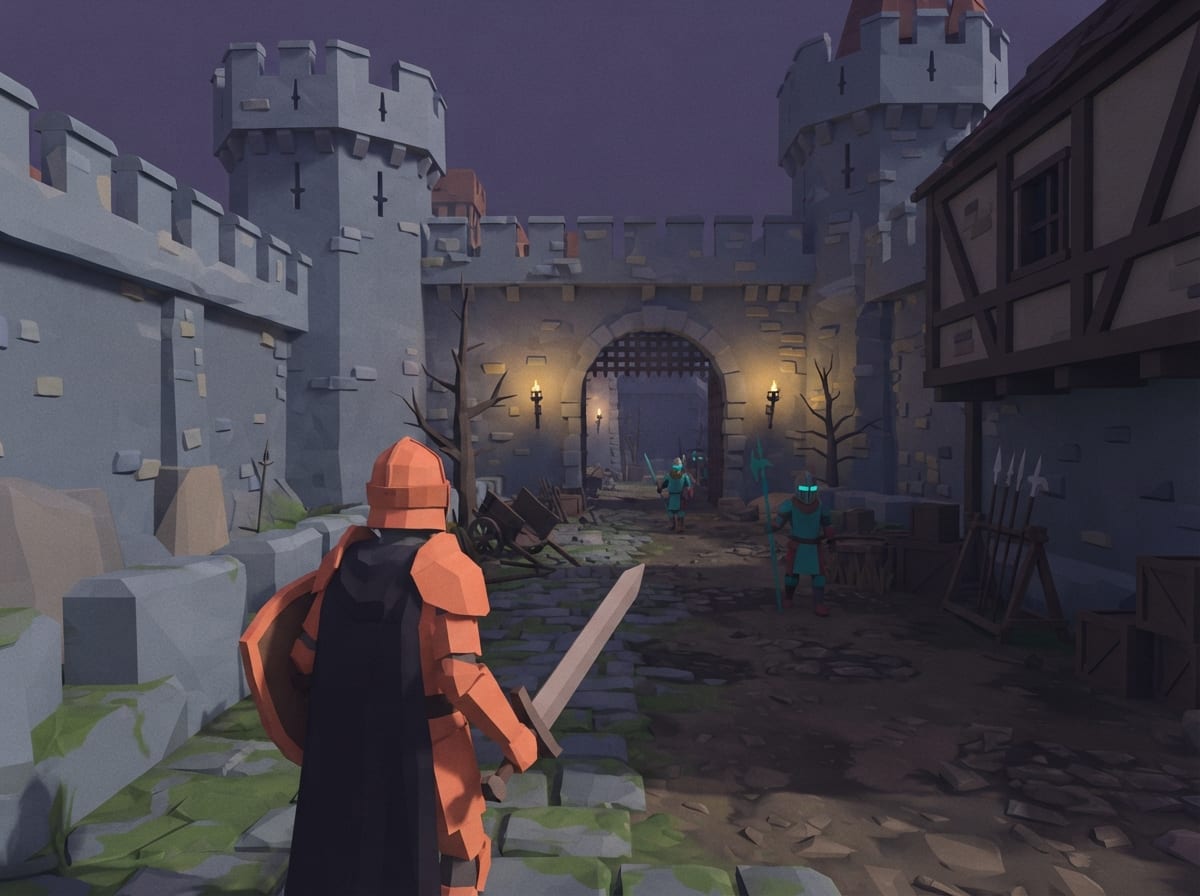
Made with Nano Banana 2 Lite · CC0 · 9 Oct 2026
Generated from: a scene from a small video game about: ASHES — COMPLETE 3D DARK FANTASY GAME Upgrade the existing knight game into a complete, atmospheric third-person 3D dark fantasy action-adventure. Preserve and improve the existing project rather than replacing it with an unrelated demo. Use real downloadable 3D assets, detailed environments, a coherent story, and fully functional gameplay. 1. REAL 3D ASSETS — USE THESE SOURCES Use the following real websites to find and integrate suitable assets. Open the actual asset pages, inspect their formats and licenses, and use downloadable files where supported. Do not merely display links or create placeholders. Knight character models https://sketchfab.com/tags/medieval-knight https://quaternius.com/ Choose a detailed, game-ready armored knight with appropriate proportions, textures, sword and optional shield. Preserve a consistent visual style across the character and world. Character animations https://www.mixamo.com/ Use suitable animations for idle, walking, running, turning, sword attacks, blocking, dodging, hit reactions and death. Retarget animations correctly to the selected character. Medieval buildings and environments https://quaternius.com/packs/medievalvillagemegakit.html https://polyhaven.com/models Create modular castle walls, towers, gates, courtyards, interiors, wooden structures, furniture, weapon racks and environmental props. Realistic textures and lighting https://polyhaven.com/textures https://polyhaven.com/hdris Use suitable stone, aged brick, metal, wood, dirt and moss materials. Apply physically based materials where supported. If a particular asset cannot be downloaded or imported, select a real alternative from the same source. Never pretend an asset has been imported when it has not. Check each asset's license and attribution requirements. 2. HISTORICAL ART DIRECTION Base the architecture and military atmosphere on the real medieval Castle of the Teutonic Order in Malbork, Poland. Historical reference: https://whc.unesco.org/en/list/847 Study its fortified courtyards, defensive walls, brick Gothic architecture, towers, monastery buildings and connected castle sections. Use these elements as architectural inspiration, not as an exact copy. The game must look like a serious, visually rich dark fantasy title: realistic proportions, detailed armor, weathered materials, dramatic shadows, restrained colors and atmospheric fog. Avoid cartoon graphics, generic low-poly scenery and repetitive rooms. Optimize lighting, shadows, textures and geometry for a GTX 1050 Ti-class PC. 3. ORIGINAL STORY — THE OATH OF ASHES Set the game in the fictional northern kingdom of Vareholm, inspired by the architecture and military orders of fourteenth-century Europe. The player is Sir Aldric Veyne, a disgraced knight returning to a remote fortress after receiving a sealed message from his former commander. Years ago, the fortress order swore to protect an ancient underground sanctuary. During a mysterious night, the garrison disappeared, the surrounding settlement was abandoned, and the fortress gates were sealed from within. Aldric discovers that the remaining knights are divided. Some guard the old oath, some have been corrupted by an unknown force, and others are hiding what happened to the commander. The player must explore the settlement, question surviving characters, discover documents, recover keys and uncover the truth beneath the fortress. Create an original narrative with environmental storytelling, short dialogue scenes, readable letters, inscriptions and meaningful discoveries. Reveal the story gradually rather than explaining everything at the beginning. 4. CONNECTED GAME WORLD Build a coherent world with distinct, interconnected locations: The Ashen Road: a ruined outdoor path with abandoned carts, dead trees, broken statues and distant fortress silhouettes. The Abandoned Settlement: ruined medieval houses, a blacksmith, a small chapel, a well and scattered evidence of the evacuation. The Outer Bailey: defensive walls, guard posts, weapon storage, training grounds and patrol routes. The Knights' Courtyard: armored soldiers, practice dummies, a commander, resting guards and interactive NPCs. The Great Hall: long wooden tables, banners, armor displays, a fireplace and a locked chamber. The Monastery: stone corridors, a chapel, a library, candlelight and secret passages. The Underground Crypt: narrow burial chambers, traps, ancient inscriptions and hostile creatures. The Final Sanctuary: a large arena beneath the fortress for the final boss. Give each location a distinct layout, lighting and purpose. Connect them through working doors, gates, stairs, corridors and paths. Use the castle as a believable military settlement, not just a collection of decorative buildings. 5. GAMEPLAY AND CHARACTER Keep the camera close behind the knight's shoulder. The character must remain clearly visible and occupy a substantial portion of the screen. Include mouse-controlled camera movement, collision-aware camera positioning and enemy lock-on. Implement responsive movement, running, dodging, light and heavy sword attacks, combos, blocking, timed parries, stamina, health, healing and enemy stagger. Use functional collision detection and hitboxes. Attacks must connect only within their actual range. Enemies must react to damage and recover naturally. Add patrols, hostile knights, corrupted soldiers and underground creatures. NPCs should occupy appropriate locations, react to nearby events and use believable idle animations. 6. QUESTS, BOSSES AND PROGRESSION Create a functional main quest with objectives, keys, clues, locked doors and checkpoints. The final enemy is the fallen commander, transformed into a heavily armored guardian. Give him distinct attack patterns, readable attack wind-ups, a boss health bar and a second phase at low health. Victory must reveal a meaningful conclusion to the story. Include death, checkpoint respawning, pause, restart and completion screens. 7. FINAL REQUIREMENTS Preserve the existing game wherever possible. Integrate real assets into the playable world, configure materials and animations, and make all essential mechanics functional. Do not return a static scene, concept art, a cinematic without gameplay, or a collection of disconnected environments. Prioritize a polished playable vertical slice: outdoor exploration, fortress entry, NPC interaction, combat, an underground section and a complete boss encounter. If the platform cannot automatically import external assets, explain which assets require manual import and continue building everything the platform supports. Do not fabricate successful downloads or working features., as an in-game screenshot in chunky low-poly 3D with flat shaded materials. Palette: dusk violet #2b2d42, stone #8d99ae, player coral #ef8354, threat teal #2a9d8f, accent gold #f4d35e. Everything is original: never draw or resemble characters, places or logos from existing games, films or brands (no red-capped plumbers, no famous mascots), even when the idea names one. Keep the pictures honest: they promise what a small first version of this game, made in a game engine in a few days, can look like. Simple readable shapes, clear silhouettes, few flat materials, the in-game camera view. Never film stills, photoreal renders, AAA key art, detailed textures, cinematic lighting, or anything that looks like a big-studio game. No text, UI, HUD, logos or editor screens inside any image.
Creator
Yiğit Oğuz
Sign in to join the conversation.
Sign in to comment🌍CC0
Use, share, and remix the model freely with no restrictions and no attribution needed.