Can You Really Make a Game with AI? | An Honest 2026 Answer
Can AI actually make a game in 2026, or is it all demos? An honest look at what works, what does not, and what you can ship today.
By Summer Team
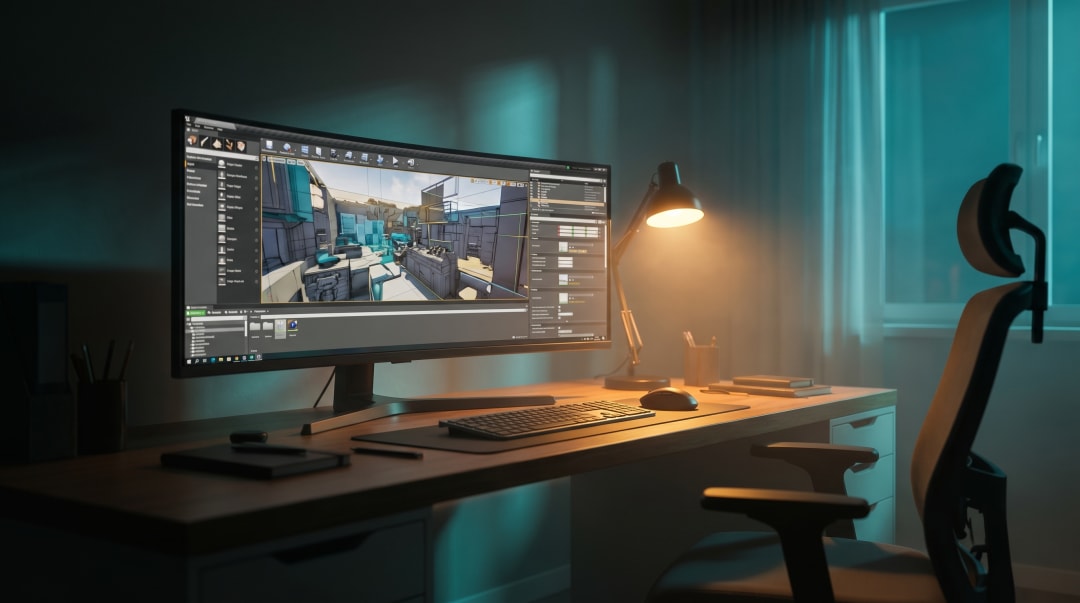
If you are asking this, you have probably watched 30 TikToks of someone typing a prompt and getting a finished game, and you are not buying it. That instinct is healthy. Most of those clips are cherry-picked, edited, or running on a tool that quietly caps out at "small browser demo." The honest answer is more nuanced than the marketing, and more interesting than the cynicism.
Here is what is actually real, what is not, and what you can ship today.
The Honest Answer in One Paragraph
Yes, you can make a game with AI in 2026. No, AI cannot finish a commercial game on its own. It can produce a playable prototype from one prompt, generate art and audio, write working scripts, and compress weeks of iteration into hours. Solo developers are putting real titles on Steam built mostly through conversation with AI inside an engine. Studios use AI as a productivity tool across animation, scripting, and content drafts. The hard part of making a game, deciding what is fun and cutting everything that is not, still belongs to a human. That is the caveat. Everything else has moved.
What AI Can Actually Do in 2026
This is the part the skeptic underestimates. AI is not a parlor trick anymore. The capabilities below are not demos, they are how games are getting made right now.
Generate a playable prototype from a prompt
Type "top-down game where the player runs a repair shop for broken robots and rewires them in a puzzle minigame" into an AI-native engine and you get a scene, a player controller, a workbench, an interaction system, and a placeholder puzzle. It is rough. It is also playable in minutes. That used to be a weekend of setup before you wrote any actual gameplay code.
Build scenes, place objects, wire up scripts
Modern AI inside a real engine is not just generating snippets. It creates nodes, configures cameras, sets up input maps, hooks signals, and edits scripts in your project. The engine is the body. The AI moves the body. For more on what that looks like in practice, see What Is an AI Game Engine.
Produce art, animations, audio
Text-to-3D, text-to-texture, text-to-sound. The quality varies. Stylized art is solid. Realistic AAA-grade work still needs human touch-up. But for most indie projects, the placeholder-to-final pipeline has collapsed. You can iterate on a character look in conversation rather than waiting two weeks for a contractor.
Translate, draft dialogue, write copy
Localization, NPC barks, item descriptions, tutorial text. AI does first-pass writing well. It is not a replacement for a real writer on a story-heavy project, but for the 80 percent of in-game text that is functional, it works.
Compress the iteration loop
This is the underrated one. Game development is mostly waiting: build times, art turnaround, programmer task queues. AI shrinks each of those windows. When you can try ten variations of a jump arc in an hour instead of three days, design improves on its own. Faster feedback is what actually moves the needle.
What AI Still Cannot Do
This is the part the hype underestimates. If you skip this section, you will get burned.
Decide if a game is fun
AI has no taste. It cannot watch a player and see them lose interest. It can ship you a working core loop in five minutes, and that loop can be boring, and the AI will not know. Fun is a human signal that requires human eyes on real players.
Balance difficulty across hundreds of hours
Combat, economy, progression curves, late-game pacing. Tuning a game for the player who is 40 hours in is a craft built on watching real humans play. AI does not have that data for your specific game.
Maintain a coherent vision across a 2-year project
AI is great at the request in front of it. Holding a single creative thread across two years of decisions is harder. Vision drift is a real failure mode when you over-delegate direction.
Replace playtesting and player feedback
Nothing replaces putting your build in front of someone and watching their hands. AI cannot do this. Your friends, your Discord, your wishlist audience, those are the inputs.
Write story content with deep emotional resonance unsupervised
AI dialogue is competent. It is rarely moving. The lines that make players cry or laugh out loud almost always have a human edit on them, and usually a human draft underneath.
Make hard creative choices about scope
The biggest game-killer is scope, and scope decisions are entirely about what you cut. AI defaults to adding. A human has to be the one to say "we are not building the multiplayer mode."
What People Are Actually Shipping
Setting aside the demo videos, here is the real shape of AI game development in 2026.
Solo devs are using AI to handle the parts of game-making they hate: tooling, scripting, asset generation, UI plumbing. They keep ownership of design, story, and the feel of the game. The result is more games shipped per developer per year than the previous generation of solo devs ever managed.
Studios are using AI for first-pass animation, level layout, dialogue drafts, localization, and code review. It is rarely the headline feature. It is in the pipeline, quietly compressing timelines.
Game jams are the most visible proving ground. Winning entries are now routinely built mostly through prompt, with the human focused on the idea and the polish. Forty-eight hours used to mean a tech demo. Now it can mean a small but complete game.
On Steam, you can find 2D and 3D titles where the credits would honestly read "designer + AI." These exist. They are not famous yet because the people shipping them are too busy shipping to make press about it.
We are not naming specific games here. The space is moving fast and we would rather understate than oversell. If you want to see what is possible, browse the Summer Engine templates for the kinds of games people are starting from today.
Three Honest Workflows You Can Use Today
This is covered in detail in How to Make a Game with AI in 2026, but here is the short version.
Browser tools like Rosebud generate small HTML5 games from a prompt. Fast, free, capped at simple 2D, no Steam path. Good for testing an idea in five minutes.
AI-assisted development pairs a coding assistant like Copilot or Claude with a traditional engine like Unity, Unreal, or Godot. Maximum control, full platform support, but you carry the engine learning curve and you spend a lot of time copy-pasting between windows.
AI-native engines treat conversation as the primary interface to a real engine. You describe what you want, the engine builds it inside your project, and you can still open any file by hand. Summer Engine sits here. It is built on Godot 4 technology, which means the output is a real project file you can ship to Steam and desktop.
Pick the one that matches your goal. Browser if you want to test a vibe. AI-assisted if you already know an engine deeply. AI-native if you want the shortest path from idea to a real shipped game.
What This Means For You
The honest answer changes depending on who is asking.
If you are a skeptical experienced dev: AI is not coming for your job, it is coming for your boilerplate. The parts of your day that are mechanical are about to be automated. The parts that are taste, design, and judgment are about to be more valuable. Treat AI as a productivity tool inside your existing engine and it pays off immediately.
If you are an aspiring solo dev: This is the easiest moment in history to ship a real game. You used to need to learn an engine for six months before you got a character to jump. Now you describe what you want and iterate. You still need design instincts. You still have to finish. But the floor has moved up dramatically. If you have an idea, the shortest path is start here.
If you have never coded: Yes, you can actually make a game now, and it is not a toy. Real 3D, real physics, real Steam export. Pick an AI-native tool, describe the worst version of your game, play it, refine. The wall that used to stop people who were not programmers is mostly gone. What is left is the same wall every developer has always faced: finishing.
Closing
The skepticism is healthy. Most of what you have seen online is overstated. But the underlying capability is real, and growing fast. AI can build the game you describe. It cannot decide if the game you describe is worth building. That is still your job, and arguably that is the best part of it.
If you want to see what this actually looks like instead of reading about it, download Summer Engine and try one prompt. You will know within an hour whether the answer to "can you really make a game with AI" is yes for you. For most people who try it, it is.
For the full landscape and a breakdown of every workflow, the pillar guide is How to Make a Game with AI in 2026. When you are ready to ship, How to Publish a Game on Steam covers the rest.
Frequently asked questions
- Can AI actually make a complete game?
AI can produce a playable prototype on its own. A complete commercial game still requires a human making design choices, cutting scope, and judging what feels fun. The engine work, scripting, asset generation, and most of the wiring can be AI-driven. The taste cannot.
- Are AI-made games good?
Some are, most are not, same as games made the traditional way. The tool does not decide quality. A solo dev with strong design instincts using AI can ship something that feels great. A weak design will still feel weak no matter how the code got written.
- Can AI design a game from scratch?
AI can suggest mechanics, pitch a core loop, and even write a one-paragraph design doc. It cannot tell you whether the result is fun. Design is a feedback loop with real players, and AI cannot sit on a couch and watch a friend stop smiling at minute eleven.
- Have any real games been made with AI?
Yes. Indie devs are shipping titles to Steam where AI handled tooling, scripting, and most of the asset generation. Game jams are now routinely won by entries built largely through prompt. The pattern is AI as the production engine, with a human owning design and direction.
- What can AI not do in game development yet?
Long-horizon design judgment, balance across hundreds of hours, and creative scope decisions. AI also struggles to maintain a single coherent vision across a multi-year project, and it cannot replace playtesting. These are not engineering limits, they are taste and time-with-players limits.
- How much of the work does AI actually do?
On a small project, AI can credibly handle most of the labor: scene setup, scripting, art and audio generation, UI plumbing, glue code. The human still spends real time on design decisions, testing, polish, and the last 20 percent that separates a demo from a game.
- Is making games with AI cheating?
No. Engines, asset stores, and middleware have always done work for developers. AI is the next layer of the same pattern. The standard at the end is the same: did you ship something people want to play?
- Will AI replace game developers?
Not in any near-term sense. It will change what a game developer spends their day doing. Less boilerplate, more design and direction. The roles that get squeezed first are the most repetitive ones. The roles that get more valuable are the ones that involve taste.
Keep reading
All posts- Jun 6, 2026 · 6 min readCan AI Make a Game? A Skeptic's Test (2026)Can AI actually make a game in 2026? We ran the test a skeptic would run, prompt by prompt, and recorded exactly where it works and where it breaks.

- Jun 6, 2026 · 7 min readCan AI Make a Video Game in 2026? An Honest AnswerCan AI make a video game in 2026? Yes, a real one you can export to Steam. Here is what AI does well, what still needs a human, and how the full workflow runs end to end.

- Jun 6, 2026 · 7 min readIs There an AI That Makes Games? An Honest Answer (2026)Is there really an AI that makes games in 2026? A skeptic's breakdown of what each kind of tool actually produces, where the category is real, where it is hype, and how to verify it yourself.
