15 Games Like Zelda for Fans of Exploration and Adventure
The best games like Zelda in 2026. Handpicked action-adventure games with dungeons, puzzles, and open worlds for fans who love exploring every corner of the map.
By Summer Team
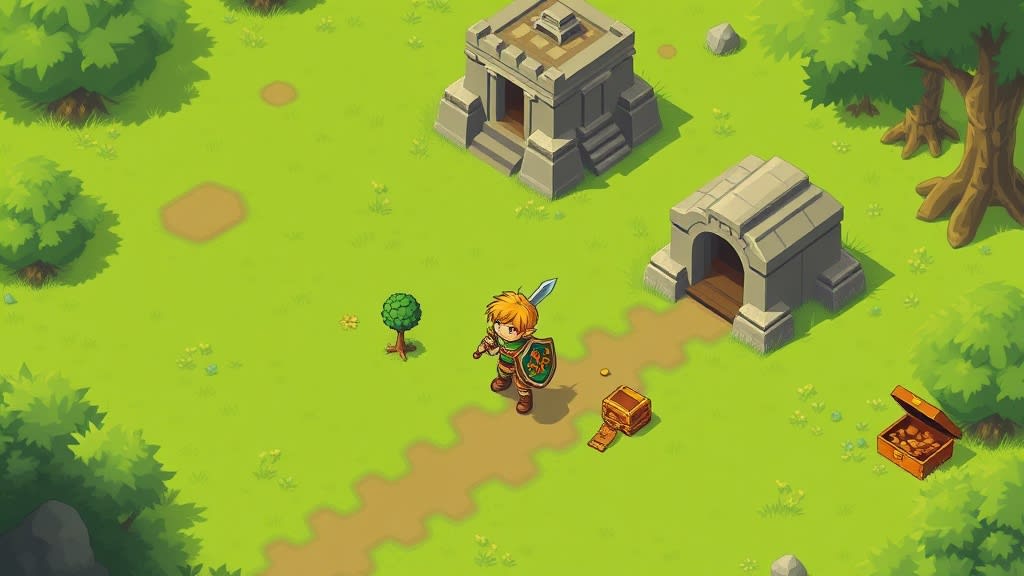
The Legend of Zelda has defined what an action-adventure game can be for nearly four decades, and the reason it endures is not any single mechanic. It is the way every system feeds into every other system. You find a new item in a dungeon and it does not just help you beat the boss -- it recontextualizes the entire world. That bombable wall you walked past three hours ago suddenly matters. The ledge you could not reach now has a purpose. Zelda games teach you their rules through play, then reward you for remembering those rules in places you did not expect.
Breath of the Wild and Tears of the Kingdom pushed this further by replacing linear item progression with physics and chemistry systems. Suddenly the question was not "do I have the right tool" but "can I think of a way to do this with what I have." The older games -- A Link to the Past, Ocarina of Time, Wind Waker -- were tighter, more curated experiences where every block and every enemy was placed with surgical precision. Both approaches share the same DNA: a world that rewards curiosity, dungeons that demand lateral thinking, and combat that stays interesting because the tools keep changing.
If you have burned through every Zelda game and want more of that feeling, here are 15 games that deliver, organized by which aspect of Zelda they capture best.
Open-World Exploration
These games understand that the best part of Zelda is cresting a hill and seeing something interesting in the distance, then spending the next forty minutes getting sidetracked on the way there.
Genshin Impact
Platforms: PC, PS4, PS5, iOS, Android
Genshin Impact took the Breath of the Wild blueprint -- stamina-gated climbing, a glider for traversal, a massive open world with puzzles and secrets scattered across it -- and built a 200-hour game on top of it. The world of Teyvat is organized into nations, each with its own biome, culture, and elemental theme. Mondstadt feels like the Hyrule Fields of the game, wide-open and breezy, while Liyue is a sprawling landscape of amber forests and towering stone formations that rivals anything in Tears of the Kingdom for sheer scale.
What elevates Genshin beyond "Breath of the Wild clone" is the elemental combo system. You swap between four characters mid-combat, each wielding a different element, and the interactions between them -- fire evaporates water to create steam, electro chains through wet enemies, ice freezes puddles into walkable platforms -- create a combat system with genuine depth. Treasure chests are hidden behind environmental puzzles, platforming challenges, and enemy encounters, and the game relentlessly rewards players who go off the beaten path. The gacha monetization is a real drawback, but the vast majority of exploration and story content is available without spending a cent.
Immortals Fenyx Rising
Platforms: PC, PS4, PS5, Xbox One, Xbox Series X/S, Switch
Ubisoft rarely gets credit for this one, and it deserves more than it received. Immortals Fenyx Rising is an open-world action-adventure set in a version of the Greek Golden Isle, and its structure is closer to Breath of the Wild than almost any other AAA game. You have a stamina bar for climbing and swimming, a glider for traversal, and an open world filled with puzzle vaults that function exactly like shrines. The world is divided into regions themed around Greek gods -- Aphrodite's area is lush and green, Ares's is a war-torn wasteland -- and each region has its own set of challenges and upgrades.
The puzzle vaults are the highlight, ranging from simple ball-pushing exercises to elaborate multi-room challenges that require combining abilities in creative ways. The combat is responsive and satisfying, with light attacks, heavy attacks, dodge mechanics, and godly abilities that you upgrade over time. The humor is hit-or-miss -- Zeus and Prometheus narrate the story through constant bickering -- but mechanically it is one of the strongest Breath of the Wild-likes available.
A Short Hike
Platforms: PC, Mac, Linux, Switch
A Short Hike proves you do not need a hundred hours of content to capture the feeling of a great Zelda overworld. You play as a bird named Claire visiting a provincial park, and your goal is to reach the summit of the mountain. Along the way you collect golden feathers that extend your flight stamina, letting you reach higher ledges and explore further. The entire game takes about two hours.
What makes it belong on this list is how perfectly it captures the Zelda sense of discovery. Every path leads somewhere interesting. Every NPC has a small story or a side activity to offer. There is a fishing minigame, a treasure hunt, a volleyball court, hidden caves, and a surprising amount of vertical exploration. The world is tiny compared to Hyrule, but it is dense with intention. Nothing is filler. If you have ever spent an hour in a Zelda game ignoring the main quest because you wanted to see what was behind that cliff, A Short Hike is built entirely around that impulse.
Windbound
Platforms: PC, PS4, Xbox One, Switch
Take Wind Waker's sailing, strip away the cartoon humor, and add survival mechanics. Windbound puts you on a small boat in an open ocean dotted with procedurally generated islands. You sail between them, gather resources, craft tools and weapons, upgrade your vessel, and explore ruins that hold fragments of a larger mystery. The sailing is the star here -- your boat responds to actual wind direction and speed, so tacking into the wind and catching gusts becomes a skill you develop over time.
The survival elements -- hunger, weapon durability, crafting -- are divisive. Some players find they add tension to the exploration loop, others feel they introduce friction where there should be freedom. It is worth trying if the idea of sailing an uncharted sea and discovering what waits on the next island speaks to you. Cresting a wave and spotting a new landmass on the horizon captures something essential about what made Wind Waker special.
Puzzle Dungeons and Clever Design
Zelda dungeons are built on a simple principle: give the player a new tool, then build rooms that teach them every possible use of that tool before the boss fight tests their mastery. These games understand that design philosophy.
Tunic
Platforms: PC, PS4, PS5, Xbox One, Xbox Series X/S, Switch, Mac
Tunic presents itself as a cute isometric Zelda homage -- you are a small fox with a sword and shield, exploring a colorful world with secrets and dungeons. For the first few hours, that is exactly what it is. Then you start finding pages of an in-game instruction manual, written in a fictional language with just enough English to be partially legible, and the game transforms into something entirely different. Tunic is a puzzle box disguised as an action game, and the puzzle is the game itself.
The manual pages reveal hidden mechanics that were always present but never explained. Entire systems exist beneath the surface that fundamentally change how you interact with the world. Saying more would spoil it, but veterans of Zelda's most cryptic moments -- bombing every wall in the original NES game, deciphering the Stone Tower Temple -- will find a kindred spirit here. The combat draws from the Souls school of stamina management and precise dodge timing. Bosses will kill you, and the game expects you to learn their patterns. One of the best indie games of the past decade.
CrossCode
Platforms: PC, PS4, PS5, Xbox One, Xbox Series X/S, Switch
CrossCode is set inside a fictional MMO, and its dungeon design is better than most Zelda games. That is not hyperbole. Each dungeon introduces a new element -- fire, ice, wave, shock -- and then constructs increasingly intricate puzzles around bouncing projectiles off walls, activating switches in sequence, and combining environmental effects in real time. The puzzles demand both spatial reasoning and quick reflexes, because your projectiles travel in real time and you often need to hit multiple targets before a timer runs out.
Combat mixes melee combos with the same projectile system used in puzzles, creating a loop where puzzle-solving skills directly improve combat effectiveness. The story is surprisingly compelling -- a mystery about memory, identity, and the nature of the virtual world you inhabit -- and the game clocks in at 30 to 40 hours with substantial post-game content. If dungeon design is what you love most about Zelda, CrossCode is essential.
Ittle Dew 2
Platforms: PC, PS4, Xbox One, Switch
Ittle Dew 2 is what happens when a developer decides that puzzle design is the only part of Zelda that matters and builds an entire game around that conviction. The overworld contains dungeons that can be completed in any order. Each dungeon grants an item -- a stick, a ring, dynamite -- and every dungeon is designed to be solvable with any combination of items. This means there are multiple valid routes through the game, and the puzzles change depending on which tools you have available.
The result is a puzzle game with genuine replay value, which is rare for the genre. Rooms that seem straightforward with one set of items become devious brain-teasers when you approach them with a different loadout. Combat exists but is deliberately simple -- it is not the point. The point is standing in a room with blocks, switches, and hazards, staring at the layout, and having that moment where the solution clicks. If you have ever wished Zelda dungeons were longer and harder, Ittle Dew 2 is exactly what you want.
Hob
Platforms: PC, PS4, Switch
Hob tells its story entirely without words. There is no dialogue, no text logs, no narration. You explore a vast interconnected world that is equal parts machine and nature, and you reshape it by activating mechanisms that physically rearrange the terrain. Pull a lever and an entire section of the map slides into a new position, revealing pathways through areas you thought you had already fully explored.
The world functions as one enormous interlocking puzzle. Each area connects to others in ways that are not immediately obvious, and the game's greatest moments come from watching a transformation cascade through the environment, suddenly understanding how three different areas relate to each other. Combat is functional but secondary to the exploration and environmental puzzle-solving. If you loved the feeling of understanding the Water Temple's water level system in Ocarina of Time -- that sense of a space with hidden mechanical logic beneath it -- Hob builds an entire game around that concept.
Lenna's Inception
Platforms: PC, Mac, Linux
A top-down Zelda-like with procedurally generated dungeons and a meta-narrative about a glitching game world. You can toggle between 8-bit and 32-bit art styles at any time, which is more than a visual gimmick -- it becomes a puzzle mechanic. The dungeon structure follows the classic formula: find the map, find the compass, find the dungeon item, defeat the boss. What sets it apart is the randomizer element. Dungeon order, item locations, and even the overworld layout change each playthrough.
This procedural approach forces you to actually explore rather than following a guide. You cannot rely on knowing that the hookshot is always in dungeon three, because it might be in dungeon seven this time. The result captures the feeling of playing a Zelda game for the first time -- genuine uncertainty about what comes next. It is rough and lo-fi, but for players who have memorized every Zelda game and want to feel lost again, it delivers.
Combat and Action
These games prioritize the feel of swinging a sword, dodging an attack, and taking down a boss. They capture the side of Zelda where you walk into a room, the doors lock, and you have to fight your way out.
Death's Door
Platforms: PC, PS4, PS5, Xbox One, Xbox Series X/S, Switch, Mac
You play as a crow employed by a bureaucratic agency that reaps souls, and when your latest assignment goes wrong, you are pulled into a world of old, powerful beings who have cheated death. The setup is charming, but the real draw is the combat. Melee attacks are quick and responsive, with a combo system that flows naturally between light strikes and heavy finishers. Ranged attacks use limited ammunition that recharges when you land melee hits, creating a rhythm where you constantly switch between close and long range.
The structure is pure Zelda: explore an area, find the dungeon, earn a new ability inside, use it to defeat the boss and unlock new overworld paths. The world is compact but incredibly dense, packed with shortcuts that loop back on themselves and secrets behind destructible walls. Death's Door respects your time -- a full playthrough takes about ten hours -- and not a minute feels wasted. Every room has a purpose and every boss fight is a genuine test of skill.
Darksiders
Platforms: PC, PS3, PS4, Xbox 360, Xbox One, Switch
Darksiders is what you get when you ask "what if Zelda, but you play as War, Horseman of the Apocalypse, and every enemy explodes when you kill it." The structure is unmistakably Zelda: a central hub world connects to themed dungeons, each containing a new traversal item that opens previously inaccessible areas. You get a hookshot equivalent, a portal gun, a boomerang blade. The progression loop of gaining an item and then re-exploring old areas with fresh eyes is straight out of Ocarina of Time.
Where Darksiders diverges is in combat intensity. Fights are closer to God of War than Zelda, with long combo strings, aerial juggles, and brutal finishing moves. The dungeon design is legitimately excellent -- rooms are layered with puzzles that use your full toolkit, and the late-game dungeons reach a level of complexity that rivals anything in the Zelda series. It is not a subtle game. It is loud, violent, and excessive. But beneath the heavy metal aesthetic is a deeply traditional Zelda-style adventure with outstanding dungeon design.
Okami
Platforms: PC, PS4, Xbox One, Switch
Okami is the game that comes closest to matching Zelda across every dimension -- exploration, puzzle design, combat, and progression. You play as Amaterasu, the sun goddess in wolf form, restoring life to a Japan-inspired world consumed by darkness. The structure mirrors Zelda almost exactly: an overworld connects themed dungeons, each built around a new ability. The twist is the Celestial Brush. At any point you can pause the game and paint on the screen. Draw a circle in the sky to summon the sun. Slash across an enemy to cut them. Draw a line from fire to an unlit torch to light it.
The brush system is one of the most original mechanics in action-adventure history, and the game builds increasingly clever puzzles around it. Combat combines standard melee attacks with brush techniques, and the interplay between the two keeps fights engaging across the game's substantial 35 to 50 hour runtime. The sumi-e ink wash art style has aged far better than most games from its era. If you only play one game on this list, make it Okami.
Phoenotopia: Awakening
Platforms: PC, Switch, PS4, Xbox One
Phoenotopia: Awakening starts as a quiet village story -- your character wakes up, helps with chores, runs errands. Then the sky opens and things escalate rapidly into a globe-spanning adventure with dungeons, towns, NPCs with actual side stories, and a crafting system that feeds into both combat and exploration. The pacing is deliberate in a way that modern games rarely attempt. It takes its time establishing the world before throwing you into danger.
Combat is stamina-based and intentionally weighty, closer to Zelda II than any modern action game. Every swing costs stamina, every dodge requires commitment, and enemies hit hard enough that button-mashing will get you killed. The world is full of hidden areas that require creative tool use -- throwing objects at walls, using bombs to open shortcuts, combining items in ways the game never tells you about. It is rough around the edges, but the sense of discovery is genuine and the dungeon design shows real craft.
Hidden Gems Worth Your Time
These two games do not fit neatly into one category. They blend multiple elements of the Zelda formula in ways that feel fresh.
Blossom Tales: The Sleeping King
Platforms: PC, Switch
A top-down action-adventure modeled directly after A Link to the Past, and it wears that influence proudly. You get a sword, a shield, bombs, a boomerang, and a bow across a series of dungeons filled with block puzzles, boss fights, and collectible upgrades. The framing device has a grandfather narrating the story to his two grandchildren, who occasionally interrupt to change the events -- at one point they argue about whether you should fight pirates or ninjas, and you choose which encounter plays out.
The dungeon design is consistently strong, with puzzles that use your full inventory and bosses that test specific skills. The overworld rewards backtracking once you have new tools. It does not attempt to reinvent anything -- it is a love letter to SNES-era Zelda, executed with care and confidence. If you grew up with A Link to the Past and want something that feels like a lost sequel, Blossom Tales delivers.
Oceanhorn 2: Knights of the Lost Realm
Platforms: PC, Switch, PS5, Xbox Series X/S
Oceanhorn 2 is the most literal Zelda-like on this list. Third-person action-adventure with an overworld connecting themed dungeons, a companion system, and an inventory of items -- grappling hook, gun, caster -- that serve double duty as combat tools and puzzle keys. The structure is Wind Waker filtered through a smaller budget, with sailing sections, island exploration, and a story about ancient civilizations.
It started life as an Apple Arcade exclusive, and certain animations and voice performances show the budget constraints. But the dungeon design is solid, the puzzles are well-constructed, and the item progression scratches the same itch as classic Zelda. If you want a 3D Zelda-style adventure with dungeons, keys, and boss fights, and you have played everything from Nintendo, Oceanhorn 2 fills that gap competently.
Frequently Asked Questions
What is the closest game to Zelda?
Okami is the closest in overall design philosophy -- it matches Zelda's mix of exploration, dungeon crawling, combat, and item-based progression more completely than any other game. For a more modern pick that captures the Breath of the Wild style specifically, Genshin Impact delivers the open-world exploration and traversal mechanics at a comparable scale.
Are there any good Zelda-like games on PC?
Most games on this list are available on PC. Tunic, CrossCode, Death's Door, Okami, and Darksiders are all excellent options. Steam is arguably the best platform for Zelda-likes because the indie scene has produced dozens of quality titles in the genre.
What games are like Zelda but harder?
Tunic and Death's Door both feature combat that is significantly more challenging than most Zelda games, drawing influence from the Souls series. CrossCode's puzzle dungeons are harder than anything in Zelda, demanding both spatial reasoning and real-time execution. Phoenotopia: Awakening has punishing stamina-based combat that requires patience and precision.
Is Genshin Impact really like Zelda?
The exploration and traversal are directly inspired by Breath of the Wild -- stamina-based climbing, gliding, an open world with puzzles and secrets. It diverges with party-based combat, RPG progression, and gacha monetization. If you love Zelda's exploration, Genshin delivers at massive scale. If you primarily love dungeon design, look at Tunic or CrossCode instead.
What Zelda-like games can I play on Switch?
Nearly every game on this list is available on Switch: Okami, Tunic, Death's Door, CrossCode, Blossom Tales, Hob, A Short Hike, Darksiders, Ittle Dew 2, and Oceanhorn 2. It is arguably the best single console for Zelda-likes outside of actual Zelda games.
Are there any free games like Zelda?
Genshin Impact is free-to-play and offers the closest experience to Breath of the Wild's open-world exploration without spending anything. The gacha system is for acquiring new characters, but the base roster and full story content are available for free.
Build Your Own Adventure Game
If playing through these games has given you ideas for your own, you do not need to start from scratch. Our adventure game template gives you a working foundation with an explorable overworld, item pickups, combat mechanics, and room transitions already built. Describe what you want in conversation and the engine builds it -- no boilerplate, no engine configuration, just your ideas turned into a working prototype.
Keep reading
All posts- Mar 30, 2026 · 14 min read15 Games Like Animal Crossing for a Relaxing EscapeThe best cozy games like Animal Crossing in 2026. Handpicked life sims, farming games, and relaxing adventures for when you need a break from the real world.
- Mar 30, 2026 · 15 min read15 Games Like Elden Ring for Fans of Punishing Combat and Open WorldsThe best games like Elden Ring in 2026. Handpicked action RPGs with brutal combat, open exploration, and worlds that reward curiosity and persistence.
- Mar 30, 2026 · 15 min read15 Games Like Fortnite in 2026 (Free Battle Royale and Building)The best games like Fortnite in 2026. Free-to-play battle royale shooters, arena games, building sandboxes, and competitive multiplayer titles ranked for PC, console, and mobile.