15 Games Like Stardew Valley for 2026 (Farm, Cozy, Sim)
The best farming sims and cozy games like Stardew Valley in 2026. Coral Island, Fields of Mistria, and 13 more, sorted by what you loved most about Stardew.
By Summer Team
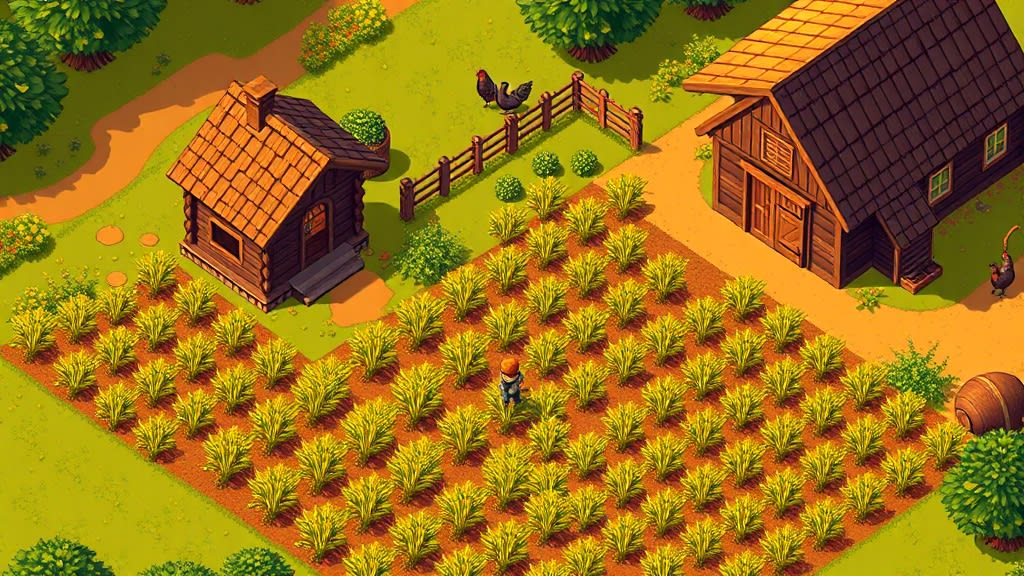
Stardew Valley works because every system feeds every other system. Grow parsnips to make money, upgrade your watering can to grow better crops, unlock the greenhouse for year-round ancient fruit. The farm is the heartbeat, but the real hook is the web around it: mines that gate sprinkler materials, friendships that unlock recipes, community center bundles that give year one a quiet sense of purpose.
What keeps people playing hundreds of hours is the rhythm. Each in-game day runs about 13 real-time minutes. Seasons change every 28 days, reshuffling crops, fish, and festivals. And underneath the cozy exterior, there is real mechanical depth: optimal crop layouts, artisan goods pipelines, skull cavern bomb runs, a perfection tracker that demands mastery of everything.
If you have squeezed everything out of Stardew, the genre has exploded since 2016. Here are 15 games that capture different parts of what makes it work, organized by what you loved most about it.
If You Love the Farming
These games nail the core loop: planting, harvesting, upgrading your land, and watching a neglected space transform into something productive.
Coral Island
The most complete Stardew successor available right now. It has the same core systems (crops, animals, artisan goods, seasonal cycles) but layers on an entire underwater diving system where you restore coral reefs and clean up ocean pollution. That second progression track gives you something meaningful to do on rainy days or when your crops are mid-cycle.
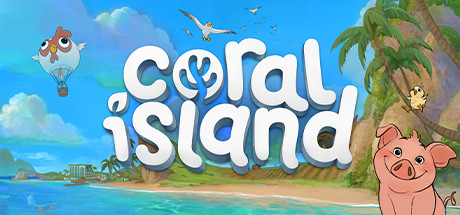
Why Stardew fans will like it: The town ranking system makes your farming output matter beyond your bank account. As you contribute to the community, the town physically upgrades: new buildings appear, roads improve, NPCs change routines. Co-op support shipped with 1.0 and the game gets steady content patches.
The short version:
- Platforms: PC, PS5, Xbox Series X/S, Switch
- Vibe: Stardew but bigger, in 3D, with ocean conservation
- Co-op: Yes, online
- Price: ~$30
Fields of Mistria
Arrived in early access and immediately became the farming sim everyone was talking about. The pixel art is among the best the genre has ever seen, with fluid animations and detailed environments that make Stardew's art look sparse by comparison.
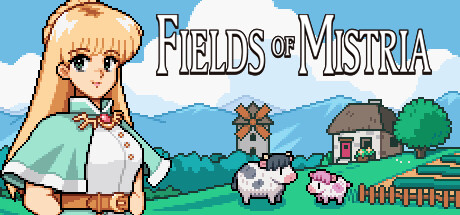
Why Stardew fans will like it: The town of Mistria is in ruins when you arrive. As you complete quests and donate resources, you physically reconstruct buildings, bridges, and public spaces. Each restoration unlocks new mechanics, NPCs, or areas. Combat takes place in mines structured more like proper dungeon floors than Stardew's repetitive cave levels, with distinct enemy types and environmental hazards per biome.
The short version:
- Platforms: PC (Early Access)
- Vibe: Gorgeous pixel art, town rebuilding, better combat
- Co-op: Not yet
- Price: ~$15
Roots of Pacha
Stardew Valley set in the Stone Age, and the premise goes deeper than a reskin. Instead of inheriting a farm with established infrastructure, you help a prehistoric clan discover agriculture from scratch.
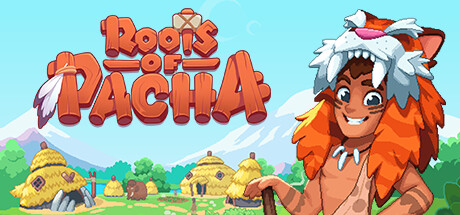
Why Stardew fans will like it: You do not buy seeds from a shop. You find wild plants, learn to cultivate them, and develop irrigation and crop rotation. Animals are befriended in the wild and domesticated over generations. The co-op (up to 4 players) is where it shines: the clan's "Ideas" system lets players vote on which innovations to pursue next, creating genuine collaborative decision-making.
The short version:
- Platforms: PC, PS5, Xbox Series X/S, Switch
- Vibe: Prehistoric Stardew with meaningful co-op
- Co-op: Yes, up to 4 players
- Price: ~$25
One Lonely Outpost
Stardew Valley on an alien planet. You are the first human colonist on a barren, rocky world. There is no soil when you arrive.
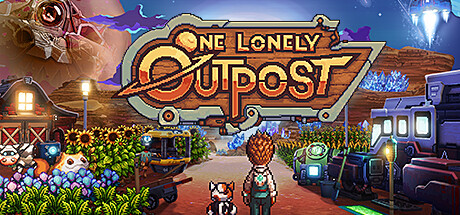
Why Stardew fans will like it: You start by terraforming small patches of ground, building hydroponic systems, and experimenting with alien plant species that behave nothing like Earth crops. Some grow in geometric patterns. Others produce crafting materials instead of food. As your settlement grows, new colonists arrive with their own skill sets and questlines. The town does not exist from the start. You build it from nothing.
The short version:
- Platforms: PC (Early Access)
- Vibe: Sci-fi farming with terraforming and alien botany
- Co-op: No
- Price: ~$20
If You Want More RPG
These games keep farming as a foundation but push harder on combat, character builds, and narrative progression.
Sun Haven
Takes the farming RPG concept and multiplies everything by three. Three distinct biomes (human, elven, monster), each with their own town, NPC roster, and storyline. A full skill tree with branches for farming, combat, mining, fishing, and magic.
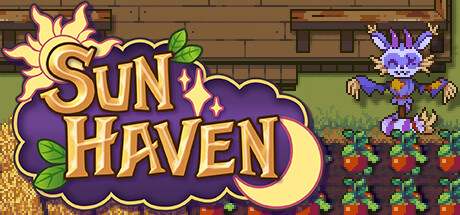
Why Stardew fans will like it: If your main complaint about Stardew was that the combat lacked depth and the RPG elements were too shallow, Sun Haven directly addresses that. Real-time combat with dodging, abilities, and boss encounters. Multiplayer for up to eight players turns it into something closer to a farming MMO. The trade-off: it is rougher around the edges and the UI can overwhelm.
The short version:
- Platforms: PC, PS5, Xbox Series X/S, Switch
- Vibe: Fantasy farming MMO with deep RPG systems
- Co-op: Yes, up to 8 players
- Price: ~$25
Rune Factory 5
The Rune Factory series invented the farming-plus-combat formula that Stardew later refined. The fifth entry goes fully 3D.

Why Stardew fans will like it: Farm by day, clear monster dungeons in the afternoon, then tame defeated creatures to work your fields or fight alongside you. The combat has multiple weapon types, combo systems, and magic spells that make fights feel like an actual action RPG. The standout mechanic: any monster you defeat can be recruited to your farm, where it tills soil, waters crops, or produces resources. Higher-level monsters from deeper floors are better workers.
The short version:
- Platforms: PC, PS4, Switch
- Vibe: The original farming+combat formula, now in 3D
- Co-op: No
- Price: ~$40 (performance warning: Switch version runs rough, PC recommended)
Moonstone Island
What happens when you combine Stardew's farming with Pokemon's creature collection and Slay the Spire's deck-building combat? Moonstone Island answers that question, and it works far better than the mashup has any right to.
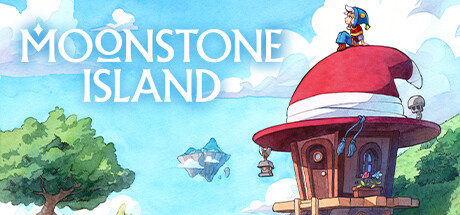
Why Stardew fans will like it: You settle on a floating sky island in a procedurally generated archipelago, farm crops, and explore neighboring islands by glider. When you encounter spirit creatures, battles play out through a card-based system. Procedural generation means every playthrough arranges islands differently, giving it genuine replay value that most farming sims lack. Shorter than Stardew (30-40 hours per run), but the combination of systems feels fresh the entire time.
The short version:
- Platforms: PC, Switch
- Vibe: Farming meets Pokemon meets Slay the Spire on sky islands
- Co-op: No
- Price: ~$20
Graveyard Keeper
The darkest farming sim ever made. You run a medieval graveyard, which involves embalming bodies, harvesting organs, crafting gravestones, and making some ethically questionable decisions about what goes into the food you sell at the tavern.
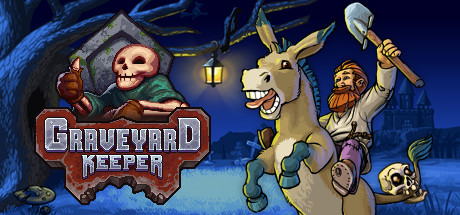
Why Stardew fans will like it: If you found Stardew's systems too simple and wanted something with genuine mechanical teeth, this is it. Resource chains are long and interconnected, with items requiring four or five crafting steps across multiple workstations. The day-of-the-week system (replacing day-night) forces you to plan around NPC schedules. The humor is bone-dry. The tech tree is enormous. Be warned: the zombie DLC adds automation that makes the late game significantly more manageable.
The short version:
- Platforms: PC, PS4, Xbox One, Switch, Mobile
- Vibe: Dark comedy graveyard management with deep crafting
- Co-op: No
- Price: ~$20
If You Love the Social Sim
These games emphasize relationships, town life, and the feeling of belonging to a community.
Spirittea
You move to a rural East Asian village, discover you can see spirits, and take over a rundown bathhouse to serve the local ghost population.

Why Stardew fans will like it: The core loop is management sim: seat spirits at the right temperature pools, keep the water heated, scrub backs, serve snacks, solve each spirit's personal problems. Meanwhile you also forage, fish, cook, and build friendships with the human townsfolk who have no idea their village is haunted. The Spirited Away influence is obvious and intentional. The spirit designs are creative, the human NPCs have actual personality (including flaws), and the bathhouse management creates a different kind of daily pressure than farming does.
The short version:
- Platforms: PC, Xbox Series X/S, Switch
- Vibe: Spirited Away meets Stardew Valley
- Co-op: No
- Price: ~$20
Wylde Flowers
A farming sim with a witchcraft twist that executes both halves with surprising quality. By day you run your grandmother's farm. By night you sneak out to join a secret coven in the woods, learning spells and brewing potions.
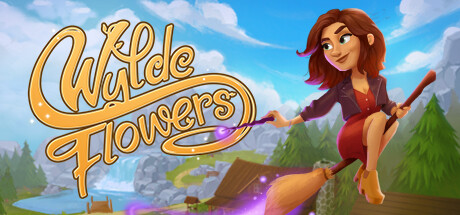
Why Stardew fans will like it: Full voice acting for every character, which is vanishingly rare in farming sims. The voice performances are genuinely good. The writing tackles mature themes (queer relationships, family grief, small-town prejudice) without being heavy-handed. The two tracks interweave as the coven's activities start affecting the farm and the town's social dynamics. If you want a farming sim with a narrative that actually goes somewhere, this is one of the strongest options.
The short version:
- Platforms: PC, PS5, Switch, Mobile
- Vibe: Farming by day, witchcraft by night, fully voice-acted
- Co-op: No
- Price: ~$30
Story of Seasons: A Wonderful Life
The remake of Harvest Moon: A Wonderful Life, the game that directly inspired ConcernedApe to create Stardew Valley.
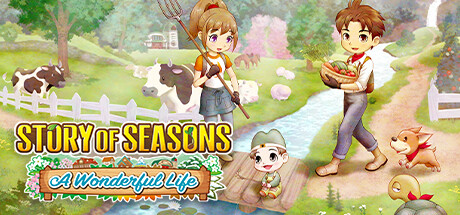
Why Stardew fans will like it: The unique hook is time. Your character ages. You get married, have a child, and watch the town change over in-game decades. Buildings deteriorate or get renovated. NPCs grow old. Your kid's personality develops based on how you interact with them. No other farming sim attempts anything like this. The remake adds new romance candidates (including same-sex options) and modernized controls. The farming itself is more relaxed than Stardew, which is either a positive or negative depending on your preferences.
The short version:
- Platforms: PC, PS5, Xbox Series X/S, Switch
- Vibe: Stardew's spiritual predecessor, now with aging and consequences
- Co-op: No
- Price: ~$40
Ooblets
Part farming sim, part creature collector, part rhythm game. You grow little creatures called Ooblets in your garden, raise them, and enter them in dance battles.
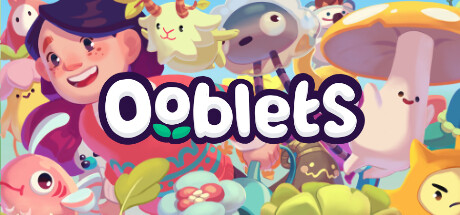
Why Stardew fans will like it: The farming loop feeds the creature loop directly. Specific crops attract specific Ooblets, and upgraded farm infrastructure lets you grow rarer species. Battles are card-based, with each Ooblet contributing moves to your hand. The art style is aggressively cute and polarizing: drenched in pastels and rounded shapes. If you can meet it on its own terms, there is a genuinely good creature collection game underneath. The dance battle system has more strategic depth than it initially suggests.
The short version:
- Platforms: PC, Xbox Series X/S, Switch
- Vibe: Pokemon dance battles meet pastel farming
- Co-op: No
- Price: ~$25
If You Want Something Different
These games share Stardew's DNA but mutate it in interesting directions.
Littlewood
The premise is brilliant: you are the hero who already saved the world, and now you need to rebuild your town during peacetime.
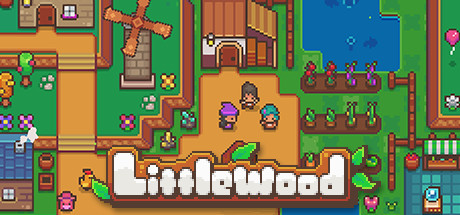
Why Stardew fans will like it: Days are not governed by a real-time clock but by an action meter. Every action drains the meter, and when it empties, the day ends. Zero time pressure. The town-building is the core: you place every building, path, and decoration on a grid. Each villager has favorite locations and neighbor preferences, adding a light puzzle element to layout. The whole experience can be completed in 30-40 hours. If Stardew's open-endedness sometimes left you directionless, Littlewood's tighter structure might be exactly what you need.
The short version:
- Platforms: PC, Switch
- Vibe: Post-adventure town rebuilding with zero time pressure
- Co-op: No
- Price: ~$15
Haunted Chocolatier
ConcernedApe's next game, from the solo developer who built Stardew Valley. You run a chocolate shop inside a haunted castle, gathering ingredients from the surrounding wilderness.
What we know so far:
- Real-time combat that looks significantly more polished and central than Stardew's mines
- A gathering-to-crafting-to-selling pipeline centered on product creation and shop management
- Multiple biomes to explore
- Customer satisfaction mechanics
- The same attention to NPC personality that defined Stardew
No release date. ConcernedApe has been characteristically quiet. But anything from this developer warrants a permanent spot on any recommendation list.
The short version:
- Platforms: TBA
- Vibe: Chocolate shop management meets action RPG from the Stardew creator
- Co-op: Unknown
- Price: Unknown
My Charming Farm
A farming sim that strips the genre back to its essentials. Grow crops, raise animals, decorate your property, and enjoy the process without combat systems or complex NPC relationship meters.
Why Stardew fans will like it: The appeal is intentional simplicity. The seasonal cycle drives the loop, and the decorating tools are more flexible than Stardew's, letting you create farm layouts that feel genuinely personal. Not every farming sim needs six interlocking progression systems. Sometimes you want to plant seeds, watch them grow, sell the harvest, and beautify your space. If you want a farming game you can play for an hour before bed without optimizing anything, this fits the bill.
The short version:
- Platforms: PC
- Vibe: Pure, relaxed farming with strong decoration tools
- Co-op: No
- Price: Budget
Quick Reference: All 15 Games at a Glance
| Game | Platforms | Co-op | Best For |
|---|---|---|---|
| Coral Island | PC, PS5, Xbox, Switch | Yes | Most complete Stardew successor |
| Fields of Mistria | PC (EA) | No | Best pixel art, town rebuilding |
| Roots of Pacha | PC, PS5, Xbox, Switch | Yes (4p) | Stone Age setting, collaborative co-op |
| One Lonely Outpost | PC (EA) | No | Sci-fi farming, terraforming |
| Sun Haven | PC, PS5, Xbox, Switch | Yes (8p) | Deep RPG systems, fantasy setting |
| Rune Factory 5 | PC, PS4, Switch | No | Best combat, monster taming |
| Moonstone Island | PC, Switch | No | Deck-building combat, sky islands |
| Graveyard Keeper | PC, PS4, Xbox, Switch, Mobile | No | Dark humor, complex crafting |
| Spirittea | PC, Xbox, Switch | No | Bathhouse management, ghost stories |
| Wylde Flowers | PC, PS5, Switch, Mobile | No | Voice-acted narrative, witchcraft |
| Story of Seasons: AWL | PC, PS5, Xbox, Switch | No | Time progression, emotional depth |
| Ooblets | PC, Xbox, Switch | No | Creature collection, dance battles |
| Littlewood | PC, Switch | No | Tight structure, zero time pressure |
| Haunted Chocolatier | TBA | Unknown | ConcernedApe's next game |
| My Charming Farm | PC | No | Pure relaxation, decoration focus |
Frequently Asked Questions
What is the closest game to Stardew Valley?
Coral Island is the most direct successor. Same core systems (farming, mining, fishing, romance, community restoration) with a bigger budget, 3D art, and additional mechanics like underwater diving.
Fields of Mistria is the other strong contender, especially if you prefer pixel art and want better combat. Both are actively developed with regular updates.
Are any of these games better than Stardew Valley?
That depends on what you value. No game on this list matches Stardew's overall polish and balance, which is the product of nearly a decade of updates from a developer who clearly cares about every detail.
But individual games surpass it in specific areas:
- Rune Factory 5 has better combat
- Story of Seasons: A Wonderful Life has a more emotionally resonant narrative
- Sun Haven has more raw content
- Fields of Mistria has better pixel art
Stardew remains the best all-rounder.
Which games have co-op or multiplayer?
- Coral Island: Online co-op
- Roots of Pacha: Online co-op, up to 4 players (particularly well-designed with shared clan progression)
- Sun Haven: Online co-op, up to 8 players
Can I play these on Nintendo Switch?
Most of them. Currently available on Switch: Coral Island, Roots of Pacha, Sun Haven, Moonstone Island, Spirittea, Ooblets, Littlewood, Graveyard Keeper, Wylde Flowers, Story of Seasons: A Wonderful Life, and Rune Factory 5.
PC-only for now: Fields of Mistria and One Lonely Outpost (both in early access, console ports expected after full release).
Performance note: Rune Factory 5 runs noticeably worse on Switch than on PC.
What farming sim should I play if I have never played Stardew Valley?
Play Stardew Valley. It is still the best entry point to the genre by a wide margin. It costs $15 USD, runs on virtually any hardware, and has more content than most $60 games. Start there, figure out which parts of it you enjoy most, then use this list to find games that lean harder into those specific aspects.
Build Your Own Farming Sim
If playing these games sparks the urge to build one yourself, that is worth acting on. Farming sims have clear, well-understood systems that translate well into game dev projects: crop growth timers, seasonal calendars, NPC schedules, inventory management, tile-based placement.
Summer Engine has simulation templates that handle the foundational systems so you can focus on the parts that make your game unique. Crop growth cycles, day-night systems, NPC routines, and inventory grids are solved problems. Your job is to figure out what your version of the community center is, what your equivalent of the mines looks like, and what makes your town worth caring about.
The best farming sims on this list all started with someone asking "what if Stardew, but..." and following that question somewhere interesting.
Keep reading
All posts- Jun 14, 2026 · 8 min read12 Games Like Cuphead for 2026 (Boss Rush, Run-and-Gun, Hand-Drawn)The best run-and-gun and boss-rush games like Cuphead in 2026. Blasphemous, Katana ZERO, Gris, and 9 more, sorted by what you loved most about Cuphead.
- Jun 14, 2026 · 8 min read13 Games Like Undertale for 2026 (RPGs With Heart, Choice, and Charm)The best story-rich RPGs like Undertale in 2026. Deltarune, OMORI, Earthbound, and 10 more, sorted by what you loved most about Undertale.
- Jun 6, 2026 · 8 min readHow to Make a Game Like Stardew Valley with AI (2026)A practical, build-it guide to making your own farming sim like Stardew Valley. The exact mechanics to recreate, which template to start from, and step-by-step prompts using Summer Engine's AI.