15 Games Like Slay the Spire for Deckbuilding Addicts
The best roguelike deckbuilders like Slay the Spire in 2026. Handpicked games with deep card synergies, meaningful choices, and that one-more-run pull.
By Summer Team
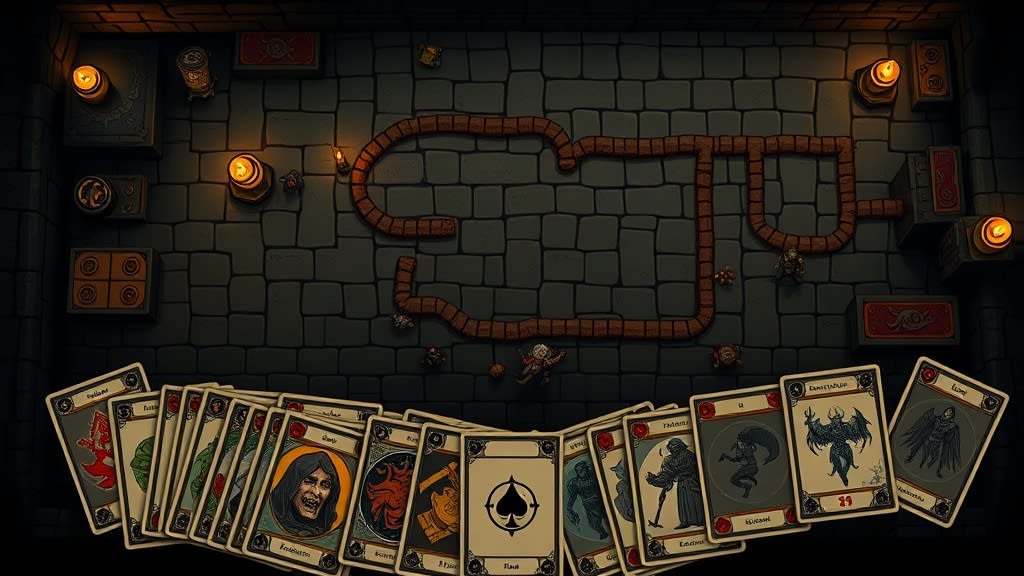
Slay the Spire did not just popularize a genre. It defined the grammar that every roguelike deckbuilder since has had to reckon with. The draft-one-card-per-combat reward structure, the branching map with risk-reward pathing, the relic system that warps your entire strategy around a single passive effect -- these are not features anymore. They are expectations. And the reason Slay the Spire still holds up years later is that every single piece of it feeds back into one question: do you take the safe line or the greedy one?
The four characters each force you to think about cards differently. The Ironclad rewards you for taking damage. The Silent builds toward a single explosive turn. The Defect asks you to plan three turns ahead with orb management. The Watcher punishes greed with a stance system that can end your run in one mistake. That mechanical variety, combined with a difficulty curve that scales all the way from casual to Ascension 20 heartbreak, is why people sink hundreds of hours into it.
If you have exhausted all four characters and still want that feeling of a run clicking into place on floor three, these 15 games will scratch the itch. Some stay close to the Slay the Spire formula. Others take the deckbuilding core and bolt it onto completely different genres. All of them are worth your time.
If You Love Pure Deckbuilding
These games focus on the card synergy puzzle above everything else. Tight pools, careful drafting, and the satisfaction of a perfectly constructed engine.
Balatro
Platforms: PC, Mac, PS4, PS5, Xbox One, Xbox Series X/S, Switch, iOS, Android
Balatro replaces fantasy combat with poker hands, and it works absurdly well. You score points by playing hands like flushes and full houses, then modify your deck with jokers that bend the scoring rules in ways that compound exponentially. A steel card doubles its chips when held. A polychrome joker multiplies your entire score. Stack three of these interactions together and you are scoring billions of points from a single pair of twos.
The genius is in the economy. You earn money between rounds and spend it on booster packs, rerolls, or joker slots. Every dollar spent on a reroll is a dollar you did not save toward the interest threshold. Every joker slot you buy is one more synergy to manage but one less safety net in your wallet. The decisions feel exactly like Slay the Spire's shop: constant tension between what your deck needs now and what it needs three blinds from now.
Runs are short, usually thirty minutes, and the skill ceiling is staggering. Once you understand how joker ordering affects multiplication chains, the game opens up entirely. This is the closest any game has come to matching Slay the Spire's "one more run" pull.
Vault of the Void
Platforms: PC
Vault of the Void is the most mechanically refined Slay the Spire-like on this list, built by someone who clearly spent hundreds of hours on Ascension 20 and wanted to push the formula further. The headline mechanic is the void: you can purge cards from your hand mid-combat to fuel powerful void abilities. This means every card in your deck has two values -- its face effect and its sacrifice value -- and you are constantly choosing between them.
Deckbuilding is tighter because of it. Where Slay the Spire sometimes punishes you for having too many cards, Vault of the Void makes every card useful even if you never play it, because feeding it to the void is itself a strong action. The six classes each interact with the void differently. The Automaton builds decks around cycling and self-damage. The Primal stacks wrath tokens that grow stronger the more cards you void.
The difficulty curve is steep and the endgame builds get degenerate in the best way. If you are the kind of player who watches Slay the Spire tier lists and optimizes draft picks, this is your game.
Cobalt Core
Platforms: PC, Mac, Switch
Cobalt Core mixes deckbuilding with spaceship combat and a time-loop narrative. You play cards to move your ship left and right, fire weapons, raise shields, and launch drones, and positioning matters because enemy attacks target specific columns. A missile headed for column three does nothing if you shift your ship two spaces to the right. This spatial layer transforms the deckbuilding puzzle from pure math into something closer to a tactics game.
The crew system is the other hook. You pick three of eight characters per run, each with their own card pool, and the combinations create wildly different strategies. Dizzy adds shield-stacking cards. Peri brings missile barrages. Max gives you drones that persist between turns. The art is charming, the writing is surprisingly funny, and runs clock in at about forty minutes. It does not try to be Slay the Spire in space. It is its own thing, and the positional combat makes it feel genuinely fresh.
If You Want More Roguelike
These games lean harder into the roguelike side -- permadeath stakes, narrative consequences, and runs that feel meaningfully different every time.
Inscryption
Platforms: PC, Mac, PS4, PS5, Switch
Inscryption starts as a creepy cabin card game where a shadowy figure deals you cards across a table and taunts you when you lose. The card battling in this first act is genuinely excellent: a sacrifice-based resource system where you feed weak cards to play powerful ones, with a board that fills up and forces spatial decisions about placement and blocking.
Then the game becomes something else entirely. Saying more would spoil one of the best surprises in recent gaming. What matters is that the card mechanics keep evolving across the full runtime, introducing new resource systems, new deckbuilding rules, and new ways to interact with the game itself. The meta-narrative is what elevates Inscryption from a good card game to something unforgettable.
Play it blind if you can. Do not read the Steam reviews. Do not watch videos. Just start it and see where it goes.
Griftlands
Platforms: PC, Switch, PS4, Xbox One
Griftlands gives you two separate decks: one for combat and one for negotiation. You can talk your way out of fights, bribe guards, intimidate merchants, or just punch everyone. The negotiation deck plays like its own card game -- you build arguments as shields, attack your opponent's resolve, and deploy rhetorical gambits that debuff their position. It is not a gimmick. The negotiation system has real depth and its own card pool worth optimizing.
The social system tracks who likes you and who wants you dead, and those relationships carry mechanical consequences through the entire run. Kill someone's friend and they might ambush you later. Spare an enemy and they might offer you a discount at their shop. Three campaigns with very different protagonists mean three very different playstyles. Klei (the Don't Starve studio) made this, and the writing has real personality -- gritty science fiction with a sense of humor.
If you want a deckbuilder where your choices have narrative weight beyond "which card do I draft," Griftlands is the one.
Nowhere Prophet
Platforms: PC, Mac, PS4, Xbox One, Switch
Nowhere Prophet sets its deckbuilding in a post-apocalyptic convoy crossing hostile territory. Your cards are followers -- actual people in your group -- and when they die in battle they are gone for good. A follower who takes lethal damage gets a wound. Take another hit while wounded and they are dead permanently, removed from your deck for the rest of the run.
That permanence changes everything about how you play. You stop throwing units away as blockers when losing them means a weaker deck for every future fight. You start caring about positioning, about retreat, about whether this battle is even worth fighting. The Indian science fiction aesthetic is distinctive and the world-building sells the stakes. Every resource decision on the overworld map -- do you push through the dangerous shortcut or take the safe path that costs food -- feeds back into the deckbuilding because your deck is your people.
Tainted Grail: Conquest
Platforms: PC
Tainted Grail puts you on a dark Arthurian island dripping with body horror and folk nightmare imagery. Nine classes, each with a unique card pool and playstyle. The Wyrdhunter plays aggressively with combo chains. The Apostate manipulates a corruption resource that powers strong cards but punishes overuse. The combat system uses a living deck that evolves mid-run based on your choices -- cards upgrade, mutate, and combine as you progress.
Between runs, you unlock new buildings and NPCs in a village hub, giving you long-term goals that persist across failures. The permanent progression is heavier than Slay the Spire's ascension system, closer to a meta-game that takes dozens of runs to fully unlock. If you want something meatier and darker with a gothic atmosphere that makes Darkest Dungeon look cheerful, Tainted Grail delivers.
If You Want a Twist on the Formula
These games take deckbuilding mechanics and combine them with other genres -- tower defense, tactics, space combat -- creating something that feels familiar but plays very differently.
Monster Train
Platforms: PC, Xbox One, Xbox Series X/S, Switch
Monster Train adds a tower defense layer to the Slay the Spire formula. You place units across three floors of a train heading to hell, and waves of heavenly enemies climb upward toward your pyre on the top floor. The floor system creates decisions Slay the Spire never has to ask: do you stack all your power on one floor for a guaranteed kill zone, or spread units thin to chip away at enemies across multiple levels?
The clan combination system is the real hook. You pick two of six factions per run, and each pairing creates completely different strategies. Hellhorned plus Awoken gives you beefy tanks that heal. Stygian Guard plus Umbra gives you spell-heavy decks that feed energy between units. The interactions between clans are where the depth lives, and there are enough pairings to keep runs feeling fresh for a long time.
Runs are faster than Slay the Spire, usually around thirty minutes, which makes it dangerously easy to start "just one more." The competitive multiplayer mode (Hell Rush) adds another dimension if you want to race other players through identical seeds.
Roguebook
Platforms: PC, PS4, PS5, Xbox One, Xbox Series X/S, Switch
Roguebook comes from Richard Garfield, the creator of Magic: The Gathering, and you can feel his design sensibility in every card. You control two heroes and swap them between front and back positions during combat. The front hero takes damage but gets attack bonuses. The back hero is safe but deals less. Deciding when to swap -- protecting a wounded hero or pushing an aggressive one forward for a killing blow -- adds a tactical layer most deckbuilders lack.
The map is a hex grid hidden under fog that you reveal by spending ink and brushes. Exploration itself becomes a resource management puzzle: every hex you reveal might contain a card reward, a relic, or a fight, but the ink to reveal it costs resources you could spend elsewhere. The card design is clean, synergies between hero pairs feel intentional rather than accidental, and the gem system (socketable modifiers for individual cards) adds another axis of customization.
Arcanium: Rise of Akhan
Platforms: PC
Arcanium spreads its deckbuilding across a tactical overworld. You control a party of three heroes on a hex map, each with their own deck, and the strategic layer adds decisions that pure card games never have to make. Which hero explores which tile? Do you split up to cover more ground or keep the party together for harder fights? Encounter order matters because the buffs you pick up in one fight carry into the next.
The card design across the hero roster is varied enough that party composition drives your strategy as much as the cards you draft. It is rougher around the edges than some entries on this list -- the UI could use polish and some encounters feel unbalanced -- but the ambition is real. If you have ever wished Slay the Spire had a party system and an overworld with real tactical choices, Arcanium is the closest thing to that vision.
Ring of Pain
Platforms: PC, Mac, Switch, iOS, Android
Ring of Pain presents its roguelike deckbuilding as a ring of cards arranged in a circle. Each turn you see two cards in front of you and choose to engage, sneak past, or use an item. Equipment cards modify your stats permanently, creature cards fight you, and event cards offer risk-reward choices. The circle structure means you can see threats coming several turns ahead, which turns every step into a calculated gamble.
The build variety comes from equipment stacking. Load up on speed and you attack before enemies can react. Stack soul gain and you heal through damage. Go all-in on critical hits and one-shot everything but die to anything that survives. Runs are fast -- fifteen to twenty minutes -- and the difficulty ramps aggressively. It does not look like Slay the Spire and it does not play like Slay the Spire, but it scratches the same "one more optimization" itch.
If You Want Multiplayer
Slay the Spire is a solo experience. These games bring deckbuilding into competitive and cooperative spaces.
Slay the Spire 2
Platforms: PC (Early Access)
The sequel. Slay the Spire 2 keeps the core loop intact -- draft cards, navigate a branching map, fight through three acts -- but adds co-op multiplayer where two players tackle the spire together with shared relic pools and coordinated turn planning. The new characters introduce mechanics the original never explored. The Necrobinder reanimates defeated enemies as temporary allies. The Adventurer builds around a backpack system that stores items between combats.
Even in early access, the foundation is rock solid. The card pool is smaller than the original's current state, but every card feels like it has a purpose. The co-op mode transforms the decision-making from internal monologue to active debate about draft priorities and pathing. If you are looking for "more Slay the Spire," this is literally that, from the same developers, with the lessons of the original baked in.
Across the Obelisk
Platforms: PC
Across the Obelisk is a four-player cooperative deckbuilder with persistent progression. Each player controls a hero with their own deck, and you tackle encounters together on a branching map. The party composition matters enormously -- a healer who buffs the right damage type for your DPS hero creates synergies that trivialize fights, while a poorly coordinated team gets crushed. Communication about draft picks and strategy becomes the game.
The progression system unlocks new cards and perks across runs, giving the whole group long-term goals to work toward. Difficulty scales well from casual to punishing. The art style is classic fantasy illustration, nothing groundbreaking, but the mechanical depth is real. If you have a friend group that exhausted your board game collection, this fills the same niche digitally.
Minion Masters
Platforms: PC, Xbox One, Xbox Series X/S
Minion Masters is not a traditional deckbuilder, but it scratches a related itch. It is a real-time competitive card game where you play units onto a two-lane battlefield and they march toward your opponent's tower. Deck construction happens before the match, and the meta-game of building a deck that counters the current ranked strategies has the same theory-crafting appeal as optimizing a Slay the Spire draft. Matches are fast (three to five minutes) and the free-to-play model is generous enough that you can compete without spending money.
The twist compared to other competitive card games is that unit placement and timing matter as much as card selection. Dropping a tank unit to absorb a push, then countering with ranged units behind it, requires real-time decision-making that pure turn-based games never demand. It is a different skill set than Slay the Spire, but if the deckbuilding theory-craft is what hooks you, the ranked ladder here is deep.
Frequently Asked Questions
What makes a good Slay the Spire alternative?
The best alternatives nail the same core loop: meaningful draft decisions, synergies that emerge from combining cards and relics in unexpected ways, and runs that feel different enough to keep you coming back. A great deckbuilder roguelike makes you feel clever when a build comes together and makes you want to immediately try again when one falls apart. Games that just copy the surface mechanics without understanding the underlying decision density tend to feel hollow.
Is Slay the Spire 2 worth playing in early access?
Yes, with the caveat that the card pool is still growing. The core mechanics are polished and the co-op mode adds genuine strategic depth. If you are someone who needs a complete game with all characters and full ascension levels, wait for the 1.0 release. If you want to experience the evolution of the formula and do not mind a smaller card pool, it is already excellent.
Which game on this list is closest to Slay the Spire?
Vault of the Void is the most mechanically similar. It has the same single-character, three-act structure with card drafting, relics, and branching maps. The void mechanic adds depth without changing the fundamental feel. Monster Train is the second closest, though the tower defense layer makes it play differently enough to feel like its own game.
Are there any good deckbuilder roguelikes on mobile?
Balatro is available on iOS and Android and is arguably better on mobile because of its short run times. Ring of Pain is on iOS. Slay the Spire itself has an excellent mobile port on iOS and Android. For a pure mobile-first experience, Balatro is the strongest recommendation -- the poker theme translates perfectly to touchscreen play.
What should I play if I want something completely different from Slay the Spire but with the same depth?
Inscryption, without question. It starts as a card game and becomes something else entirely, and the less you know going in, the better. If you want depth in a competitive setting rather than single-player, Minion Masters offers real-time deckbuilding strategy with a skill ceiling that will keep you busy for years.
Build Your Own Deckbuilder
Every game on this list started with someone asking "what if cards worked like this?" If you have your own answer to that question, you can prototype it faster than you think.
Summer Engine has a roguelike deckbuilder template that handles the core systems: card drafting, procedural map generation, turn-based combat, relic and status effect frameworks, and save state management between runs. Describe what you want your deckbuilder to do in plain English -- the card mechanics, the theme, the twist that makes it yours -- and the AI builds the foundation. You focus on the design decisions that matter: which cards feel good, which synergies create interesting choices, and what makes your game worth one more run.
Check out the full template library to see what else you can build.
Keep reading
All posts- Jun 6, 2026 · 9 min readHow to Make a Deckbuilder Like Slay the Spire (With AI)A step-by-step guide to building your own roguelike deckbuilder with AI. The exact systems to recreate, which template to start from, and how to ship it on Summer Engine.
- May 13, 2026 · 8 min read15 Games Like Balatro (2026): Roguelike Deckbuilders Worth PlayingThe best games like Balatro in 2026. Handpicked roguelike deckbuilders, card-luck score-chasers, and run-based strategy games for fans of meta-builds.
- Jun 14, 2026 · 8 min read13 Games Like Hades for 2026 (Roguelikes, Action, Run-Based)The best action roguelikes like Hades in 2026. Dead Cells, Hades II, Returnal, and 10 more, sorted by what you loved most about Hades.