15 Games Like Hollow Knight That Deserve Your Attention in 2026
The best games like Hollow Knight in 2026. Handpicked metroidvanias and action-platformers for fans who love tight combat, interconnected worlds, and the thrill of getting lost underground.
By Summer Team
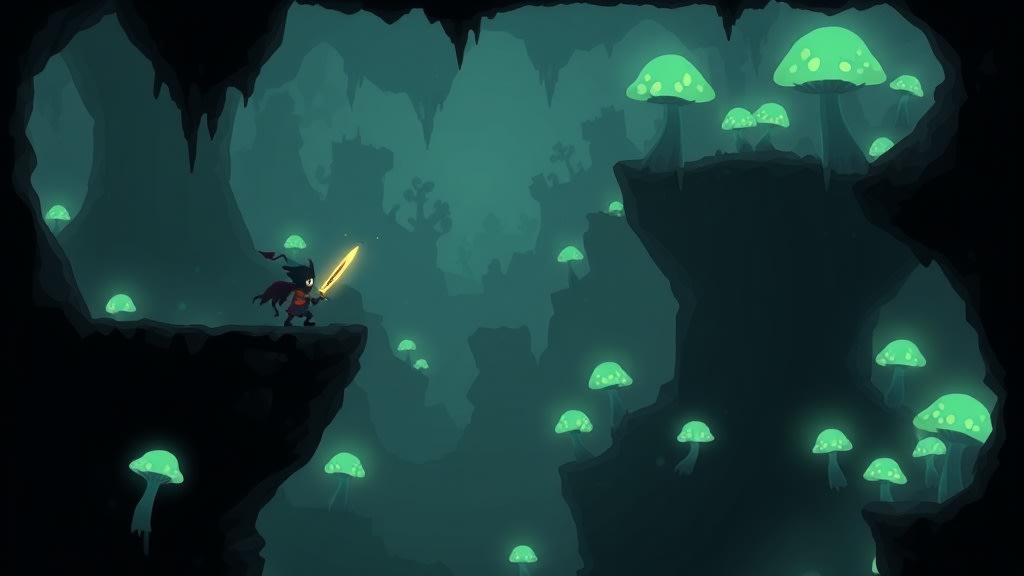
Hollow Knight is one of those rare games that earns its reputation through sheer craft rather than marketing spend. Team Cherry built a world that feels genuinely alive -- not because of scripted events or cinematic set pieces, but because every tunnel, every bench, every forgotten corner of Hallownest tells you something about a civilization that collapsed long before you arrived. The Forgotten Crossroads teaches you the rules. Greenpath teaches you to look up. City of Tears teaches you to listen. And by the time you reach the Abyss, the game has trained you to read its world like a language.
What makes Hollow Knight endure is the intersection of its systems. The combat is tight, with every nail swing carrying weight and every charm loadout creating a genuinely different playstyle. Quick Slash and Unbreakable Strength turn you into an aggressive brawler. Mark of Pride and Steady Body turn you into a patient poker. Shape of Unn and spore builds turn you into something completely different. And underneath all of that sits the exploration -- a sprawling, hand-drawn map that loops back on itself in ways that reward curiosity over completionism. You don't check off rooms. You discover connections.
If you have finished Hollow Knight and feel the specific ache of a game that gave you 60 hours and left you wanting more, the list below is for you. These 15 games each capture something that made Hollow Knight special, whether that is the exploration, the combat, or the atmosphere. I have grouped them by what they do best so you can find exactly what you are craving.
If You Love the Exploration
These games prioritize the feeling of getting lost in an interconnected world, finding shortcuts that loop you back to familiar ground, and earning every inch of the map through observation rather than objective markers.
Hollow Knight: Silksong
Platforms: PC, Mac, Linux, Switch, PS4, PS5, Xbox One, Xbox Series X/S
The sequel plays Hornet, and the shift from the Knight's grounded, nail-focused combat to Hornet's silk-based movement changes everything. She is faster, more vertical, and her tools lean into momentum in a way the original never did. The world of Pharloom is built around this speed -- areas are taller, traversal puzzles are more aggressive, and the map branches in surprising directions. Team Cherry kept the same philosophy of trusting the player to find their own path, but the vocabulary is different enough that you are genuinely learning a new game rather than replaying the old one. It shipped September 2025, and a free expansion is already in the works.
The boss design deserves specific mention. Silksong's fights ask you to stay airborne more than grounded, and the healing system has been reworked around crafted tools rather than focusing soul. If you have muscle memory from Hollow Knight, Silksong will force you to unlearn some of it, and that is the best possible compliment for a sequel.
Axiom Verge 2
Platforms: PC, PS4, PS5, Switch
Axiom Verge 2 pulls a fascinating trick: it shares a universe with the first game but plays almost nothing like it. The original was a Metroid-style shooter. This one strips out most of the gunplay and builds its exploration around a dimension-shifting mechanic -- you can hack into a parallel world called the Breach that sits on top of the main map like a transparency sheet. The two layers interact in ways that make exploration genuinely cerebral. A wall that blocks you in the real world might have a gap in the Breach. A pathway in the Breach might deposit you on the other side of a locked door.
If exploration was your favorite part of Hollow Knight, this is the game that comes closest to replicating the feeling of staring at the map and thinking "I bet I can get there from here." Combat takes a back seat, which will disappoint some players, but the world design is dense and rewards patient players who like to poke at boundaries.
Rain World
Platforms: PC, PS4, PS5, Switch
Rain World is the most hostile game on this list, and that hostility is exactly why it belongs here. You play as a slugcat, a small creature near the bottom of the food chain in a procedurally animated ecosystem. There are no power-ups. No waypoints. No quest log. The world runs on its own schedule -- rain cycles force you to find shelter, predators patrol routes based on AI behavior rather than scripted patterns, and your position in the food chain never really changes. You learn to survive by reading the environment the way you read Hallownest: through failure, observation, and pattern recognition.
The movement has a steep learning curve. Slugcat physics are intentionally sloppy -- you slide, you fumble, you misjudge jumps. But once you internalize the weight and momentum, traversal becomes deeply satisfying. The Downpour DLC adds campaigns with different slugcats that each change how you interact with the ecosystem. Rivulet is fast but fragile. Artificer can explode things. Saint cannot kill at all. Each recontextualizes the entire world.
Ender Lilies: Quietus of the Knights
Platforms: PC, PS4, PS5, Xbox One, Xbox Series X/S, Switch
You play as Lily, a small, fragile girl in the ruined kingdom of Land's End. Every boss you defeat becomes a spirit that fights alongside you, and these spirits double as your traversal tools and combat abilities. This is the core loop: explore, find a boss gate, overcome the fight, inherit their power, use it to open up new parts of the map. The progression is clean and satisfying in the way Hollow Knight's ability gates are -- you constantly pass ledges and barriers that you know you will come back to later.
The atmosphere is melancholic in a way that feels genuinely close to Hollow Knight. The art uses muted watercolors, the soundtrack is piano-driven and restrained, and the lore is delivered through item descriptions and environmental storytelling. Combat is fast and rewards aggression, with dodge timing being more important than spacing. One of the best metroidvanias released in the last five years, and a strong recommendation for anyone who liked the sad beauty of City of Tears.
If You Want Harder Combat
These games take Hollow Knight's combat philosophy -- tight, pattern-based, punishing but fair -- and push it further. Expect to die, learn, and adapt.
Blasphemous 2
Platforms: PC, PS5, Xbox Series X/S, Switch
The first Blasphemous was stiff. It had incredible pixel art and a fascinatingly grotesque world built on Spanish Catholic iconography, but the combat punished aggression and the movement felt heavy in ways that were not always intentional. Blasphemous 2 fixes nearly everything. You now choose between three starting weapons -- a sword, a flail, and a set of prayer beads -- and each weapon unlocks different traversal abilities, meaning exploration is gated by your build choices rather than a single linear set of upgrades.
The boss design is dramatically improved. Fights are faster, more readable, and built around learning phases rather than memorizing long attack chains. The world is more interconnected, with shortcuts and loops that feel purposeful rather than arbitrary. If you bounced off the first game, Blasphemous 2 is worth a second look. If you loved the first game, this is everything you wanted it to be.
Salt and Sanctuary
Platforms: PC, PS4, PS Vita, Switch, Xbox One
Salt and Sanctuary is the game that proved Souls-like combat works in two dimensions. It has a full class system with over 40 weapon types, equipment load that changes your dodge, stamina management, and a massive interconnected world that loops back on itself the way Lordran does in Dark Souls. The skill tree is sprawling -- you can build a greatsword-wielding tank, a pyromancer, a whip-based dexterity build, or a cleric who heals through prayer. The build variety is genuinely excellent and gives the game far more replay value than most metroidvanias.
The art style is hand-drawn and intentionally rough. It is divisive -- some people find it charming, others find it ugly. But the level design underneath is smart, with elevators and shortcuts that make the world feel like a puzzle box. Bring a friend for local co-op, which adds a layer of chaos to the exploration. The sequel, Salt and Sacrifice, shifted to a Monster Hunter-style hunt structure and lost some of the original's magic, so start here.
Death's Gambit: Afterlife
Platforms: PC, PS4, Xbox One, Switch
Death's Gambit launched in a rough state and was effectively rebuilt with the Afterlife update, which added ten new levels, over 30 weapons, a talent tree system, and reworked the combat from the ground up. The result is a 2D action RPG that feels genuinely distinct. Each of the seven classes plays differently -- the Sentinel is a shield-based tank, the Blood Knight heals by dealing damage, the Acolyte of Death uses scythes and dark magic. The combat is weighty and deliberate, closer to Dark Souls than Hollow Knight in its pacing.
The story surprised me. It deals with immortality and the psychological toll of not being able to die, which is a clever meta-commentary on the death-and-respawn loop that Souls-likes are built on. The boss fights are the highlight -- they are large, cinematic, and designed around specific class strengths. The map is more linear than Hollow Knight, but the branching paths and hidden areas give it enough exploration to satisfy.
Crowsworn
Platforms: PC, PS5, Xbox Series X/S, Switch, Mac, Linux (coming 2026)
Crowsworn has been called "Hollow Knight meets Bloodborne," and for once, the comparison is earned. The combat is built around a rally mechanic -- you recover health by attacking immediately after taking damage, which creates a risk-reward loop that rewards aggression over caution. The nail-style attacks feel responsive, the dash has generous i-frames, and the boss encounters are designed around reading tells and punishing recovery windows.
The art style takes direct inspiration from Hollow Knight while pushing toward a darker, more gothic tone. The environments are detailed and moody, with a hand-drawn quality that sits somewhere between Hollow Knight's clean lines and Blasphemous's grotesque detail. It is not out yet as of this writing, but it is confirmed for 2026 and the gameplay footage suggests it will be one of the year's strongest metroidvanias. This is the game most Hollow Knight fans are watching.
Vigil: The Longest Night
Platforms: PC, Switch
Vigil flew under most radars, which is a shame, because it does something few metroidvanias attempt: it gives you access to four weapon types from the start, each with its own skill tree, and encourages switching between them mid-fight. Swords are fast and safe. Halberds have range. Twin daggers reward perfect timing. Bows let you play keepaway. The combat system has genuine depth, and the game does not gatekeep any of it behind progression.
The world draws on Lovecraftian imagery -- not the tentacle-monster kind, but the creeping-dread kind. Areas shift between eerie villages, flooded cathedrals, and nightmare dimensions. The atmosphere is surreal and unsettling in a way that distinguishes it from the typical metroidvania palette. The exploration is solid if not remarkable, but the build variety and combat depth make it worth playing through at least twice with different weapon focuses.
If You Love the Atmosphere
These games prioritize mood, tone, and the feeling of being somewhere that matters. They build worlds you want to sit in, not just traverse.
Ori and the Will of the Wisps
Platforms: PC, Xbox One, Switch
The first Ori was a beautiful platformer with mediocre combat. Will of the Wisps is a beautiful platformer with genuinely excellent combat. Moon Studios added a proper weapon system -- you equip spirit shards and spirit weapons that change how you fight, and there is real build variety in choosing between the Spirit Edge (melee sword), Spirit Star (ranged shuriken), and Spike (ground pound). Boss fights rival Hollow Knight's best, with multi-phase encounters that test both your combat and platforming skills.
But the atmosphere is what earns Ori its spot in this section. The art direction is some of the best in any 2D game ever made. Every frame looks like a painting, and the animation is fluid in a way that makes movement feel like choreography. The soundtrack by Gareth Coker is devastating -- the kind of music that makes you stop moving just to listen. The story hits hard, especially in the final act. If Hollow Knight's melancholy appealed to you, Ori channels a similar emotional register through a completely different aesthetic language.
Ori and the Blind Forest
Platforms: PC, Xbox One, Switch
The original Ori is worth playing even after Will of the Wisps, because its platforming is purer. The bash mechanic -- where you grab a projectile or enemy, aim a direction, and launch yourself while sending the grabbed object the other way -- is one of the best single mechanics in any platformer. It transforms combat encounters into platforming puzzles and traversal challenges into combat puzzles. The escape sequences, where you flee rising water or collapsing environments using every skill you have learned, are among the most exhilarating moments in the genre.
It is shorter and more linear than Hollow Knight, running about eight to ten hours. But the level design is tight enough that every room feels intentional. The save system (you manually create soul links that cost energy) adds tension that modern checkpointing removes. And the emotional arc, from the devastating opening to the bittersweet ending, gives it a narrative weight that most metroidvanias do not attempt.
Blasphemous
Platforms: PC, PS4, Xbox One, Switch
If Hollow Knight is melancholy, Blasphemous is anguish. The entire game is built on the aesthetic of Spanish Catholic penitence -- flagellation, martyrdom, relics of saints, and suffering as a path to grace. The pixel art is grotesque and gorgeous in equal measure. Bosses are towering, twisted religious figures. Environments drip with blood and gold. The visual identity is so strong that you could recognize a Blasphemous screenshot from across the room.
The gameplay is slower and more deliberate than Hollow Knight. Your character, the Penitent One, swings a massive sword called the Mea Culpa, and combat is built around parries, executions, and careful positioning rather than dashing. The world design is cryptic -- items have lore descriptions that do not make sense until your second playthrough, NPCs speak in riddles, and the true ending requires finding hidden connections between seemingly unrelated quests. If you liked piecing together Hallownest's history from item descriptions and environmental details, Blasphemous offers the same kind of archaeological storytelling.
Grime
Platforms: PC, PS4, PS5, Xbox One, Xbox Series X/S, Switch
Grime builds its entire identity around one mechanic: absorption. You can parry enemies by absorbing them into your body at the moment of impact, and doing so fills a resource meter that fuels your special abilities. Kill enough of a specific enemy type and you unlock their trait permanently. The world is built from living rock and organic matter, with an art direction that looks like someone sculpted the entire game out of clay and bone. It is deeply weird in the best way.
The Souls-like structure is strong -- you rest at surrogates (bonfires), lose currency on death, and fight bosses that require pattern memorization and stamina management. But the absorption mechanic gives it a unique identity. Choosing whether to dodge or absorb creates a constant risk-reward calculation that keeps combat engaging throughout. The world interconnects well, with shortcuts and loops that reward thorough exploration. It does not get mentioned alongside the genre's best often enough.
Sundered
Platforms: PC, PS4, Switch
Sundered takes a procedurally generated approach to the metroidvania structure, which sounds like it should not work, but it mostly does. Each region has a fixed layout of key rooms and boss arenas, but the connecting corridors shuffle between runs. The art is hand-drawn and fluid, with a Lovecraftian aesthetic that prioritizes scale -- bosses fill the screen, and environments stretch into the distance in ways that feel genuinely vast.
The skill tree offers a meaningful choice: you can resist or embrace the eldritch corruption that permeates the world, and your decision changes your abilities, your ending, and even the visual design of your character. Combat is horde-based rather than one-on-one, with enemies spawning in waves that force crowd control and mobility rather than precise dueling. It is a different rhythm than Hollow Knight, but the atmosphere of exploring a collapsing, alien world hits a similar nerve.
Minishoot' Adventures
Platforms: PC
This one breaks the mold. Minishoot' Adventures is a top-down twin-stick shooter wrapped in a metroidvania structure, and it works far better than that description suggests. You pilot a small ship through an interconnected overworld, unlocking abilities that open new areas, fighting bosses that gate progression, and discovering secrets hidden behind destructible walls and environmental puzzles. The exploration loop is pure metroidvania -- the combat just happens to be a shooter instead of a platformer.
The world design is surprisingly dense for a game of its size. Areas are visually distinct, shortcuts loop back meaningfully, and the map is filled with optional challenges and hidden upgrades. The difficulty curve is well-tuned, with bosses that escalate in complexity without becoming unfair. It runs about eight to twelve hours, which is a sweet spot for this kind of game. If you want something that captures Hollow Knight's exploration philosophy in a completely different genre wrapper, Minishoot' is an unexpected gem.
Frequently Asked Questions
Is Hollow Knight: Silksong a direct sequel?
Yes, but it stands on its own. Silksong takes place in a different kingdom (Pharloom) with a different playable character (Hornet). There are narrative connections to the original -- Hornet's backstory carries forward, and some lore threads tie the two worlds together -- but you do not need to have finished Hollow Knight to understand or enjoy Silksong. The gameplay is different enough that it feels like its own game rather than an expansion.
What is the closest game to Hollow Knight in terms of feel?
Ender Lilies is probably the closest in atmosphere -- melancholic, quiet, beautiful in a sad way. For combat feel, Crowsworn is deliberately building on Hollow Knight's foundation with faster, more aggressive mechanics. For exploration specifically, Axiom Verge 2's dual-world system scratches the same itch of looking at the map and figuring out how to reach a room you can see but cannot access.
Are any of these games harder than Hollow Knight?
Rain World is significantly harder in a different way -- it is not about boss patterns but about surviving in a world that actively hunts you. Salt and Sanctuary's Souls-like difficulty is comparable to Hollow Knight's harder content (Pantheon of Hallownest, Nightmare King Grimm). Blasphemous is roughly similar in difficulty, while both Ori games are easier on the combat side but have challenging platforming sequences.
Which game on this list has the best boss fights?
Blasphemous 2 and Death's Gambit: Afterlife have the strongest overall boss rosters. Blasphemous 2 excels at multi-phase fights with readable but demanding patterns. Death's Gambit goes for scale and spectacle. Silksong's bosses are excellent but designed around Hornet's faster moveset, so they feel different from Hollow Knight's bosses rather than directly comparable.
Should I play the Ori games in order?
Yes. The story of the first game provides emotional context for the second, and the mechanical improvements in Will of the Wisps feel more meaningful if you have experienced what Blind Forest did (and did not) do. Blind Forest is also a shorter, tighter experience that works well as an entry point. That said, Will of the Wisps is the better game, so if you only have time for one, play that.
Build Your Own Metroidvania
Playing through this list might give you ideas. Maybe you want interconnected rooms that loop back on themselves the way Hallownest does. Maybe you want ability-gated progression where finding a dash opens up three new areas. Maybe you want boss fights that test pattern recognition and punish greed. Whatever it is, the impulse to build your own version of the thing you love is worth acting on.
Summer Engine has a metroidvania template that gives you a working foundation: interconnected rooms, ability-gated progression, a combat system, and a map that tracks where you have been. You describe what you want in plain language and the engine builds it. Change the art direction, add new enemy types, design a boss with specific attack patterns -- you are working with a real game engine, not a toy. It is the fastest way to go from "I have an idea for a metroidvania" to something you can actually play and share.
Keep reading
All posts- Mar 24, 2026 · 12 min read15 Games Like Vampire Survivors You Need to Play in 2026The best games like Vampire Survivors in 2026. Handpicked auto-attack horde survival games for fans who love screen-filling chaos, satisfying builds, and that one-more-run feeling.
- Jun 14, 2026 · 8 min read12 Games Like Cuphead for 2026 (Boss Rush, Run-and-Gun, Hand-Drawn)The best run-and-gun and boss-rush games like Cuphead in 2026. Blasphemous, Katana ZERO, Gris, and 9 more, sorted by what you loved most about Cuphead.
- Jun 14, 2026 · 8 min read13 Games Like Undertale for 2026 (RPGs With Heart, Choice, and Charm)The best story-rich RPGs like Undertale in 2026. Deltarune, OMORI, Earthbound, and 10 more, sorted by what you loved most about Undertale.