15 Games Like Dark Souls That Will Test Your Limits
The best games like Dark Souls in 2026. Handpicked soulslikes and action RPGs for fans who love punishing combat, interconnected worlds, and the satisfaction of finally beating that boss.
By Summer Team
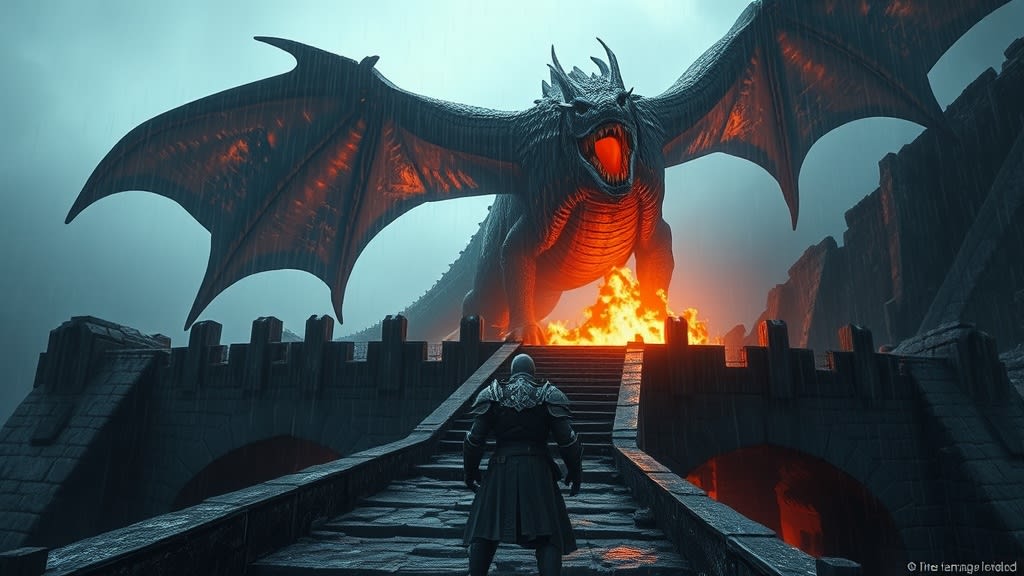
Dark Souls did not just raise the bar for difficulty in games. It redefined what difficulty could mean. Before 2011, hard games were often hard because of bad design -- cheap hits, unclear objectives, or controls that fought against you. Dark Souls flipped that script entirely. Every death in Lordran felt earned. Every enemy had readable tells. Every trap, once you understood the logic of the world, made a kind of cruel sense. The game trusted its players to figure things out, and millions of them responded by doing exactly that, over and over, through hundreds of deaths per playthrough.
What made Dark Souls stick was never just the difficulty, though. It was the interlocking systems that made difficulty feel purposeful. Stamina management turned every swing into a risk-reward calculation. The souls currency system meant death always cost you something tangible, creating real tension every time you pushed deeper into an unknown area. The interconnected world design -- where an elevator from the depths of Blighttown deposits you back at Firelink Shrine -- rewarded exploration with an almost architectural satisfaction. And the storytelling, told through item descriptions and environmental details rather than cutscenes, created a world that felt ancient and unknowable in a way that exposition-heavy RPGs never manage.
The genre that Dark Souls spawned -- now universally called "soulslike" -- has grown enormous. Some of these games replicate the formula closely. Others take specific elements and push them in new directions. The following 15 games each capture something essential about what makes Dark Souls great, organized by what specifically drew you to the Souls series in the first place.
If You Love the Combat
These games nail the thing that keeps you coming back to Dark Souls: weighty, deliberate combat where every input matters and button mashing gets you killed.
Elden Ring
Platforms: PC, PS4, PS5, Xbox One, Xbox Series X/S
FromSoftware took twelve years of Souls design knowledge and dropped it into an open world, and the result is arguably the studio's masterpiece. Elden Ring keeps the stamina-based combat, the dodge rolling, the punishing bosses, but wraps it all in a world where getting stuck on a boss means riding your horse across a field and finding an entirely new dungeon, questline, or optional boss to tackle instead. The build variety is the deepest in any Souls game by a wide margin. You can dual-wield colossal greatswords, play a pure sorcerer raining comets from across the arena, or build around bleed procs that shred health bars in seconds.
The open world does change the pacing. Some players miss the tight interconnected corridors of Dark Souls 1, and the late-game difficulty spike is real -- Malenia alone has probably ended more runs than any Souls boss in history. But the Shadow of the Erdtree DLC proved FromSoftware can still design brutally hard, tightly focused content. Messmer, Promised Consort Radahn, and the Scadutree Fragments system showed the studio is still pushing what the formula can do. If you have played every Dark Souls game and somehow skipped Elden Ring, stop reading this list and go play it.
Sekiro: Shadows Die Twice
Platforms: PC, PS4, PS5, Xbox One, Xbox Series X/S
Sekiro is the most divisive FromSoftware game because it strips out nearly everything RPG players rely on as a crutch. There are no builds. No summons. No leveling past a boss that walls you. Instead, you get a single katana, a prosthetic arm with gadget attachments, and a posture-based deflection system that turns every fight into a rhythmic duel. Deflecting an attack at the exact right moment fills the enemy's posture gauge, and when it breaks, you land a deathblow regardless of their remaining health. When this system clicks -- and it takes hours for most players -- Sekiro's combat becomes the most satisfying melee combat FromSoftware has ever designed.
The boss design reflects this focus. Genichiro Ashina is the game's skill check: a three-phase fight that teaches you to stop dodging and start deflecting. Isshin, the Sword Saint, is a four-phase gauntlet that tests everything you have learned across the entire game. There is no way to outlevel these fights or summon help. You either internalize the combat system or you hit a wall. That constraint is exactly what makes Sekiro's highs so high. Beating Isshin after fifty attempts feels like a genuine personal achievement in a way that few games can replicate.
Nioh 2
Platforms: PC, PS4, PS5
Nioh 2 is what happens when Team Ninja applies their Ninja Gaiden pedigree to the Souls template. The stance system gives every weapon three full movesets -- high stance for damage, mid for balance, low for speed -- and the ki pulse mechanic rewards aggressive play by letting you recover stamina mid-combo with a timed button press. Where Dark Souls combat is methodical and weighty, Nioh 2 is fast, technical, and dense with systems. Yokai Shift forms, Burst Counters, soul cores that grant enemy abilities, switchglaives that change weapon category depending on your stance -- the depth here is staggering.
The endgame is where Nioh 2 truly separates itself. Dream of the Nioh difficulty and the Depths of the Underworld offer hundreds of hours of gear optimization, set bonus theorycrafting, and increasingly brutal enemy configurations. If you thought Dark Souls was too slow or too simple in its build options, Nioh 2 operates at a completely different speed and complexity level. The co-op is also excellent, with random Torii Gate matchmaking that pairs you with other players seamlessly.
Lies of P
Platforms: PC, PS4, PS5, Xbox One, Xbox Series X/S
A soulslike set in a Belle Epoque city overrun by killer puppets, loosely based on Pinocchio. The premise sounds absurd, but the execution is remarkably confident. Neowiz Games clearly studied FromSoftware's design philosophy closely: the level design loops back on itself in satisfying ways, the boss fights escalate in complexity and spectacle, and the atmosphere -- gas-lit streets, crumbling opera houses, plague-ravaged districts -- is genuinely haunting. The weapon assembly system is the standout mechanic. Every weapon can be split into a blade and a handle, and mixing components from different weapons creates combinations that change your moveset, scaling, and Fable Art entirely.
The guard regain system, where blocking an attack lets you recover lost health by immediately counterattacking, encourages a more aggressive playstyle than Dark Souls' passive shield tanking. Perfect guards function like Sekiro's deflections, staggering enemies and opening them to Fatal Attacks. The game leans hard into this aggressive loop, and on higher difficulties, mastering perfect guards is essentially mandatory. Lies of P is the strongest non-FromSoftware soulslike released so far, and the upcoming DLC and sequel suggest the studio is only getting better.
If You Want the Atmosphere
Dark Souls' world felt oppressive, melancholic, and deeply strange. These games capture that same sense of exploring a dying world full of things that want to kill you.
Hollow Knight
Platforms: PC, PS4, Xbox One, Switch, Mac, Linux
Hollow Knight translates the Souls philosophy into 2D with a precision that borders on uncanny. You descend into Hallownest, a vast underground kingdom of insects, with no map until you find the cartographer hidden somewhere in each new zone. You lose your currency (Geo) on death and must return to your corpse's location to reclaim it -- fail, and it is gone permanently. Bosses will kill you dozens of times before you learn their patterns. The Mantis Lords, the Watcher Knights, the Radiance -- each fight is a masterclass in 2D boss design with clear tells, tight windows, and escalating phases.
What elevates Hollow Knight beyond a 2D Souls clone is the sheer scale and quality of its world. Hallownest contains over a dozen distinct biomes, each with its own visual identity, music, enemy types, and lore. The Charm system serves as your build variety, letting you customize your loadout with passive abilities that fundamentally change how you play. And the Pantheon of Hallownest endgame content -- a boss rush gauntlet culminating in the Absolute Radiance -- is among the hardest challenges in any game ever made. All of this from a three-person studio on a modest Kickstarter budget.
Blasphemous
Platforms: PC, PS4, Xbox One, Switch
Dark Souls meets Spanish Catholic horror rendered in some of the most striking pixel art in the medium. The world of Cvstodia is drenched in religious imagery -- flagellants, weeping madonnas, grotesque miracles -- and the atmosphere is genuinely unsettling in a way that few games attempt. Combat is slower and more deliberate than most 2D action games, built around parries, dodge timing, and brutal execution animations called Prayers. The interconnected world is full of hidden paths, cryptic NPC questlines, and lore that only begins to make sense on a second playthrough.
Blasphemous 2 improves the gameplay significantly with multiple weapon types and tighter controls, but the original has an atmosphere that remains unmatched. The Penitent One's journey through a world twisted by a curse called the Miracle captures the same sense of tragic inevitability that permeates Lordran. If you gravitated toward Dark Souls for its gothic aesthetics and oppressive mood more than its specific combat mechanics, Blasphemous is essential.
Lords of the Fallen (2023)
Platforms: PC, PS5, Xbox Series X/S
The 2023 reboot from Hexworks nails one big idea: a dual-world system where you can shift between the living realm and a dark parallel dimension called the Umbral at any time. In the living world, you fight standard enemies and explore gothic cathedrals. Raise your Umbral lamp, and the architecture warps -- new paths appear where walls once stood, spectral enemies crawl from the ground, and the longer you remain in the Umbral realm, the more aggressive and numerous the enemies become. This constant tension between worlds gives exploration a unique rhythm that no other soulslike has replicated.
The world design hews closer to Dark Souls 1's interconnected approach than most modern soulslikes dare to attempt. Shortcuts loop back to vestiges (bonfires), areas connect in unexpected ways, and the dual-world mechanic means each zone effectively has two versions to explore. The game launched in a rough state with performance issues and balance problems, but extensive post-launch patches have addressed the worst of it. If you value atmosphere and exploration in your soulslikes above all else, Lords of the Fallen delivers something genuinely different.
Mortal Shell
Platforms: PC, PS4, PS5, Xbox One, Xbox Series X/S
A short, focused soulslike built around one brilliant mechanic: hardening. At any point -- mid-attack, mid-dodge, mid-heal -- you can freeze your character into stone, absorbing one hit completely before continuing your action. This single mechanic transforms every encounter. You can harden mid-swing, tank a hit that would have interrupted you, and let your attack land anyway. It creates a deliberate, almost chess-like rhythm where every action involves calculating whether to commit fully or harden at the last moment.
The shell system replaces traditional leveling. You find and inhabit different humanoid bodies scattered throughout the world, each with different health pools, stamina, and special abilities. One shell is a tanky warrior, another a fragile but powerful damage dealer, another rewards perfect play with resolve generation for powerful ripper attacks. The game is only about 15 hours long, and that restraint works entirely in its favor. Mortal Shell does not overstay its welcome or pad itself with filler. It has one great idea, executes it well, and ends before it gets stale.
If You Love Build Variety and Progression
Part of Dark Souls' magic was choosing a class, finding new weapons, and watching a build come together over dozens of hours. These games scratch that same itch.
Remnant 2
Platforms: PC, PS5, Xbox Series X/S
Dark Souls with guns, done right. Remnant 2 is a third-person co-op shooter built on soulslike bones: checkpoint crystals that respawn enemies, boss fog walls, punishing encounters that require pattern recognition, and deep build-focused progression. The archetype system gives each class a distinct identity -- the Handler fights alongside a dog companion, the Gunslinger chains instant reloads and fire-rate buffs, the Summoner commands minions -- and dual-classing opens up serious theorycrafting. A Medic/Summoner plays nothing like an Archon/Ritualist, and discovering synergies between archetypes is genuinely rewarding.
The procedural generation is the other standout feature. Every player's world is assembled from different tileset combinations, boss encounters, and event triggers, meaning your playthrough will contain areas and bosses your friends never saw in theirs. This keeps co-op interesting well past the first run, since joining a friend's game often means encountering entirely new content. The DLCs have added substantial new worlds and archetypes. If you want the tension and build depth of Dark Souls but prefer ranged combat and co-op, Remnant 2 is the best option available.
Salt and Sanctuary
Platforms: PC, PS4, PS Vita, Switch, Xbox One
Salt and Sanctuary proved the Souls formula works in 2D before Hollow Knight made it mainstream. It has a full class system, equipment load thresholds that affect dodge speed, scaling weapon upgrades, and a massive interconnected world that loops back on itself the way Lordran does. The skill tree is enormous -- a sprawling web of nodes that lets you spec into greatswords, magic, whips, prayers, or any combination thereof. The hand-drawn art style is deliberately rough and scratchy, which is divisive, but the level design and build variety underneath are genuinely excellent.
The sequel, Salt and Sacrifice, shifted to a Monster Hunter-inspired structure with mage hunts, and opinions are split on whether it improved on the original. But Salt and Sanctuary remains one of the purest 2D translations of Dark Souls' RPG systems. Local co-op support makes it even better. If you want a game where you agonize over stat allocation, swap between weapons depending on the boss, and carefully manage your equipment load, this delivers that experience in a surprisingly complete package.
Dead Cells
Platforms: PC, PS4, PS5, Xbox One, Xbox Series X/S, Switch, iOS, Android
Dead Cells is a roguelite, not a soulslike, but the combat DNA is undeniable. Attacks are committal with real recovery frames. Dodge timing matters against every enemy type. Bosses will annihilate you if you mash buttons instead of learning their patterns. The critical difference is that death resets your run entirely -- no corpse runs, no soul retrieval. What carries over between runs is meta-progression: unlocked weapons, mutations, and routes through the island. Each run takes 30 to 60 minutes, making it ideal when you want Souls-style tension without the multi-hour commitment.
The build variety within each run is enormous. Every weapon has a distinct moveset, and synergies between items create wildly different playstyles. A run built around fire synergy with an oil sword and fire grenades plays nothing like a run built around ice with frost blast and a war javelin. The Boss Cell system -- Dead Cells' equivalent of New Game Plus -- adds increasingly punishing modifiers across five difficulty tiers, with the final tier demanding near-flawless play. Motion Twin has supported the game with years of free updates and paid DLCs, and the total weapon and biome count in 2026 is massive.
Star Wars Jedi: Survivor
Platforms: PC, PS5, Xbox Series X/S
Jedi Survivor takes the Sekiro-inspired parry combat from Fallen Order and expands it significantly with five lightsaber stances, each with a distinct moveset, rhythm, and tactical niche. Single blade is your balanced all-rounder. Double-bladed excels at crowd control. Dual wield is fast and aggressive. Crossguard -- essentially an ultra greatsword in lightsaber form -- is slow but devastating, with hyperarmor on heavy swings that lets you trade hits with bosses. Blaster stance pairs a saber with a pistol for ranged harassment between melee combos.
The progression system lets you unlock and upgrade abilities within each stance, and you can equip two stances at any time, swapping between them mid-combat. Grandmaster difficulty is genuinely punishing, requiring precise parry timing and stance-switching to handle different enemy types efficiently. The exploration side leans metroidvania, with Force abilities gating access to areas you can revisit later for secrets and upgrades. Respawn Entertainment understood that the Souls formula and Star Wars are a natural fit -- lightsaber combat was always supposed to feel lethal and precise, and the soulslike framework delivers that fantasy perfectly.
If You Want Something Different
These games take core Souls ideas and push them into unexpected territory. They prove the formula has legs beyond medieval fantasy.
Hyper Light Drifter
Platforms: PC, PS4, Xbox One, Switch, iOS
Hyper Light Drifter never uses a single word of dialogue or text. The story is told entirely through pixel art visuals, environmental storytelling, and cryptic NPC animations. You play a drifter exploring the ruins of a fallen civilization, fighting through four distinct regions in whatever order you choose. The combat is fast and precise -- a dash-heavy system built around chain dashing between enemies, landing two or three sword strikes, then dashing away before the counterattack lands. Health is extremely limited, healing is slow and leaves you vulnerable, and enemies hit hard from the first zone onward.
The world design shares Dark Souls' philosophy of showing rather than telling. Massive titan corpses litter the landscape. Ruined cities suggest a catastrophe that no one explains. NPCs communicate through picture sequences that hint at events without spelling them out. The result is a game that feels lonely, melancholic, and beautiful in the same way that Ash Lake or Majula do in the Souls games. It is only about eight hours long, but those eight hours are dense with secrets, hidden rooms, and optional challenges that reward thorough exploration.
Tunic
Platforms: PC, PS4, PS5, Xbox One, Xbox Series X/S, Switch
Tunic looks like an adorable isometric Zelda clone, and that disguise is entirely intentional. Underneath the cute fox protagonist and colorful world lies a game built on the same design principles as Dark Souls: obscured mechanics, hidden paths everywhere, enemies that will kill you fast if you get greedy, and a world full of secrets that the game never explicitly tells you exist. The central conceit is that you find pages of the game's own instruction manual scattered throughout the world, and these pages -- written in a fictional language with hand-drawn diagrams -- gradually reveal mechanics, hidden areas, and an entire secret layer to the game that most players do not discover until late in a playthrough.
The combat is straightforward -- dodge roll, shield, sword, magic -- but the tuning is Souls-tight. Healing is limited, stamina management matters, and bosses have multi-phase patterns that require memorization and precise timing. The real magic is the puzzle layer that exists on top of the action game. Tunic is full of secrets that require you to think about the game itself as a puzzle, examining manual pages for coded messages and environmental clues. It captures the feeling of playing Dark Souls in 2011, when nobody knew the rules and every discovery felt monumental.
Ashen
Platforms: PC, PS4, Xbox One, Switch
Ashen takes the soulslike formula and centers it around community building. You start in an empty world and gradually attract NPCs to your settlement, each one unlocking new crafting options, quests, and upgrades. The passive multiplayer system is the standout feature: instead of summoning players through signs, Ashen seamlessly drops other players into your world as your AI companion, replacing the NPC without announcement. You might fight alongside what you think is an AI partner for an hour before realizing it was another player the entire time.
The combat is deliberately simpler than Dark Souls -- there are no shields, and the weapon variety is more limited -- but the encounter design compensates with environmental hazards, ambushes, and boss fights that are clearly designed around having a partner. The art style is striking, with faceless characters and a muted color palette that gives the world a handcrafted, almost storybook quality. Ashen is shorter and more focused than most soulslikes, clocking in around 15 to 20 hours, and it is one of the few games in the genre that genuinely feels designed for cooperative play rather than bolting co-op onto a single-player experience.
Frequently Asked Questions
What makes a game a "soulslike"?
The term has become broad, but the core pillars are: stamina-based or committal melee combat where button inputs have real weight and recovery frames; a risk-reward death mechanic where you drop currency or progress and must retrieve it; challenging enemies and bosses designed around pattern recognition and precise timing; and interconnected or shortcut-rich world design that rewards exploration. Not every game on this list hits all four pillars, but each one captures at least two of them in a meaningful way.
Is Elden Ring a good starting point for the Souls genre?
Yes, and it is probably the best one in 2026. The open world structure means you are never truly stuck -- if a boss walls you, you can ride away and explore dozens of other areas, gaining levels, weapons, and upgrades before returning. Spirit ash summons provide a difficulty release valve that purist Souls games lack. And the sheer volume of content means you can play for over a hundred hours before touching the DLC. That said, if you specifically want the tight, corridor-based design of Dark Souls 1, Lies of P is a closer match.
Are there any soulslike games on mobile?
Dead Cells is available on iOS and Android with excellent touch controls and controller support. Hyper Light Drifter has a strong iOS port as well. Beyond those two, the mobile soulslike space is thin on quality options. Pascals Wager is a dedicated mobile soulslike that is decent but not on the level of the console entries on this list.
Which game on this list is the hardest?
Sekiro on a first playthrough is probably the highest raw difficulty floor because you cannot outlevel or outgear the challenges. However, the Pantheon of Hallownest in Hollow Knight and Boss Cell 5 in Dead Cells both represent endgame difficulty spikes that rival anything in the genre. Nioh 2's Depths of the Underworld at Dream of the Nioh difficulty is also in the conversation. "Hardest" depends on your personal strengths -- Sekiro is hardest if you struggle with deflection timing, Hollow Knight is hardest if 2D platforming bosses give you trouble.
Will Hollow Knight: Silksong ever come out?
As of early 2026, Silksong remains one of the most anticipated games in the indie space. Team Cherry has been notably quiet since its initial reveal, and no firm release date has been confirmed. The original Hollow Knight set an extraordinarily high bar, so the wait -- while painful -- at least suggests the studio is not rushing to meet it. When it does release, expect it to land near the top of any updated version of this list.
Build Your Own Soulslike
Playing fifteen soulslikes might scratch the itch, but nothing compares to building the one that exists in your head. If you have ever sketched out a boss fight on paper, theorycrafted a stamina system, or imagined an interconnected world that loops back on itself in surprising ways, you already have the seed of a game.
Summer Engine has a soulslike template that gives you a working foundation out of the box: stamina-based combat, lock-on targeting, dodge rolling with invincibility frames, bonfire-style checkpoints, and a souls currency system with drop-on-death and retrieval. You describe the game you want in plain language -- the setting, the combat feel, the boss behavior -- and the engine builds it. No boilerplate, no weeks spent wiring up basic systems before you can start designing the parts that actually make your game unique.
The template is a starting point, not a ceiling. Swap the medieval fantasy assets for sci-fi. Replace the melee combat with the gun-and-dodge loop from Remnant 2. Add a dual-world mechanic like Lords of the Fallen. The point is to skip the months of foundational work and get straight to the design decisions that make your soulslike yours. Check out the template library to see what is available and start building.
Keep reading
All posts- Mar 30, 2026 · 15 min read15 Games Like Elden Ring for Fans of Punishing Combat and Open WorldsThe best games like Elden Ring in 2026. Handpicked action RPGs with brutal combat, open exploration, and worlds that reward curiosity and persistence.
- Jun 6, 2026 · 8 min readHow to Make a Game Like Elden Ring with AI (2026)How to make a game like Elden Ring with AI in 2026. The core mechanics to recreate, which template to start from, and a step-by-step build plan in Summer Engine, with an honest take on scope.

- May 13, 2026 · 7 min readBest Games Like Stardew Valley in 2026 (Cozy Farming Picks)The best games like Stardew Valley in 2026. New cozy farming sims, life sims, and 2026 releases worth playing right now, ranked by what you loved most.